Meta Made the Recording Light Tamper-Proof
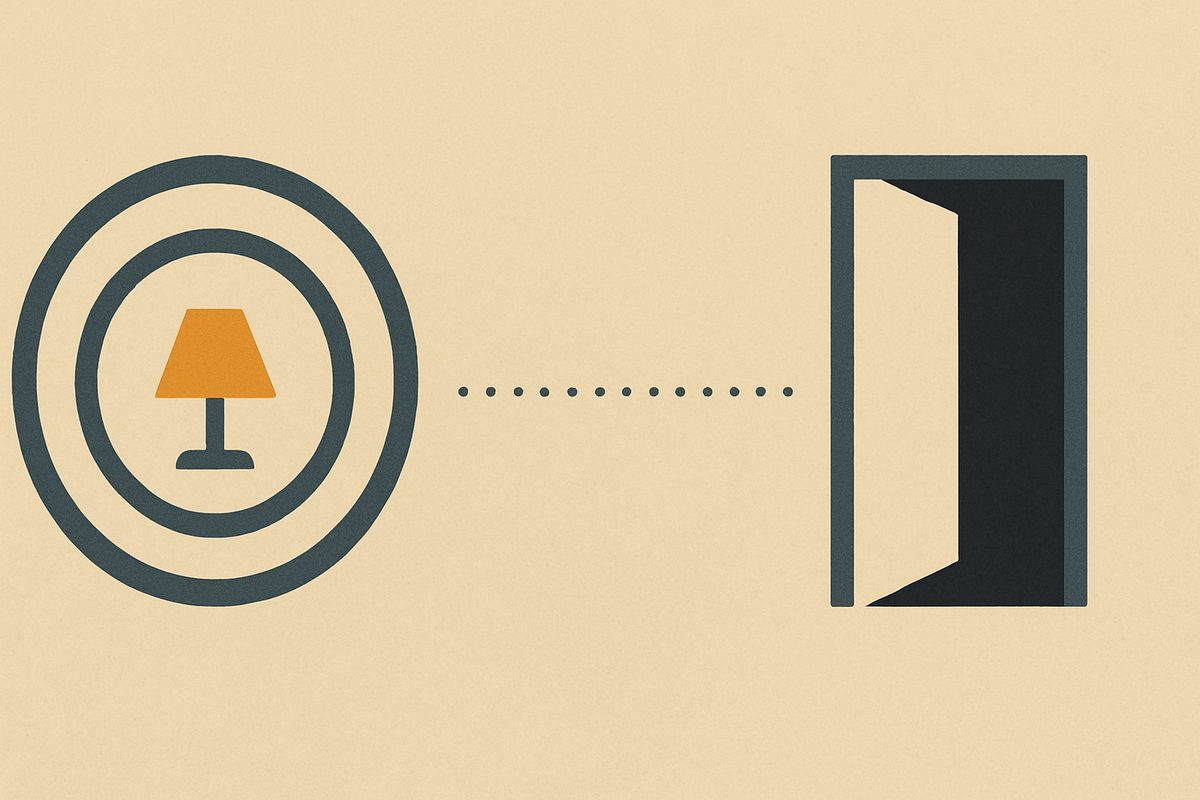
Nobody Banned the Glasses Over Tampering
Some people were paying to have the little white light removed from their camera glasses. Covering it with tape stopped working two generations ago. So a market appeared for taking the thing out altogether — as a service, for money, advertised openly.
Meta's answer in July was to make the camera die with it. A mandatory update disables recording entirely when the device detects that the capture LED has been physically altered or destroyed, and the company says it is pulling the listings that advertise the modification and will go after the people selling it. Independent coverage of the change records the same thing. It is a serious piece of engineering aimed squarely at a real abuse.
It is also aimed at a different problem from the one that got the glasses banned.
What the four institutions actually said
Four of them barred the device inside seven months — a hacker conference, every courthouse in New York State, the US Air Force, a UK convention promoter. Read their stated reasons and the word "tampering" does not appear.
DEF CON's reasoning was that there is no consistent way to tell whether a pair is recording. New York's courts take the glasses at the door and hold them, across more than 1,240 courts and binding on staff and attorneys too. DEF CON makes no exception even for prescription lenses.
None of that is about a defeated indicator. It is about an intact one being unreadable at conversational distance, in ordinary light, by someone who is not looking for it. A tamper-proof light that a bystander still cannot see is a tamper-proof light that does not answer the objection.
Both things can be true at once, and probably are. Removing the LED is a real abuse and worth engineering against. It is simply not the abuse the four institutions named, and hardening one does not close the other.
The ban that cannot be enforced at the door
The gap widens when you ask how any of these rules is supposed to work in practice.
An employment-law practice writing for retailers puts it plainly: enforcement "relies on the honor system". Their reasons are mechanical, not legal. Smart glasses cannot be "bricked" the way a phone can be. What the wearer is running is not visible to anybody else. And unlike a handset held up in plain sight, the glasses look like glasses — far less conspicuous, as the firm puts it.
That last point is the one that has changed since the first attempt at this technology. Google Glass announced itself; a prism sat above one eye, and everybody in the room knew before the wearer said a word. Whatever else that design got wrong, it made the social question answerable at a glance, which is the one thing the current generation deliberately does not do. This generation shares a frame with ordinary sunglasses, a fact running lists of venue bans note — though that particular source sells radio-based detection kit, so it has a commercial stake in the enforcement gap being real, and the identification problem is stated independently by the law firm above.
So the door supervisor is asked to spot a device designed not to be spotted, and the rule falls back on people declaring themselves. New York's answer — surrender them on entry — works because a courthouse can search bags and post officers. A convention or a shop has neither.
A blanket ban is not the safe option it looks like
Here the picture inverts, and this is the part missing from every ban story.
A health-law practice reviewing smart glasses in workplaces and clinics lists the exposure in both directions. The obvious side first: because most of these devices capture audio alongside video, a recording pulls the whole conversation into wiretap law, which matters acutely in the thirteen states requiring all-party consent. In a clinic, a device that incidentally catches a name on a wristband or a screen showing results has captured protected health information. Illinois attaches liability to biometric processing without written consent.
It is worth pausing on the audio, because it is the part most likely to catch an ordinary person by surprise. The bans and the coverage are almost entirely about the camera — the light, the lens, whether you can tell it is on. But these devices capture sound by default, and the moment they do, the protection that applies is not privacy-in-public but wiretap law, which is considerably older and considerably less forgiving. Thirteen states require every party to a conversation to consent. A wearer who has diligently checked that the little light is working, and who would never point a camera at a stranger, can still be on the wrong side of that line while doing nothing they think of as recording.
Then the side nobody writes about. The same advisory notes that overly broad no-recording policies can be unlawful under the National Labor Relations Act, which protects employees documenting their working conditions in certain circumstances — a point the employment firm makes independently. And it says smart glasses function as legitimate assistive technology for vision, hearing and cognitive disabilities, which creates duties to accommodate rather than categorically prohibit.
That is a direct answer to a question this desk left open a day ago, when we noted that three of the four bans reach prescription lenses and wondered whether any workable exemption existed. According to practitioners advising real clients, the question is not whether an exemption is available but whether refusing to consider one is defensible. Their recommendation is not a blanket rule. It is narrowly scoped restrictions by time, place and stated business reason, with a documented accommodation pathway attached.
The practical difference is small on paper and large at a door. A blanket rule says no. A scoped rule with a pathway says no, and here is who to ask, and here is what happens next. Neither necessarily lets the glasses through — a courtroom may still be a courtroom. But one of them leaves a person standing at an entrance with a device they depend on and nobody whose job it is to hear them, and the other does not. That distinction costs an institution a paragraph of policy and a named contact. It is not obvious why three of the four skipped it, beyond nobody having raised it.
None of that makes any of the four bans unlawful. These are advisories about drafting policy, not rulings, and nobody has tested them against a hacker conference or a court system. But it does mean the institutions still writing their rules are choosing between two kinds of risk rather than one, and only one of them has been in the coverage.
Everyone is defending a line that is not where the argument is
Put the three pieces together and the shape is odd.
The manufacturer has spent real effort making the disclosure signal impossible to destroy. The venues have written rules they can only enforce by asking people to be honest. And the lawyers are advising that the blanket version of those rules creates fresh liability of its own.
Every party is acting reasonably inside its own frame. The manufacturer defends the indicator, because that is the part it controls. The venue bans the device, because it cannot police the behaviour. The lawyer narrows the rule, because a broad one is the kind that gets challenged. Nobody is being careless.
But the actual question — how does a stranger know, in the moment, whether they are being recorded — sits between all three, and none of them can answer it alone. A light the wearer cannot remove still has to be seen. A rule at the door still has to identify the device. A narrowly scoped policy still has to be applied by a person who cannot tell.
The four bans look blunt because a blunt instrument is the only one available when the fine ones do not reach. That is worth saying clearly, because it also tells you what would change the situation: not a better light, and not a firmer ban, but some way for the person being recorded to know it without depending on the goodwill of the person recording. Nothing in any of these three responses is that.
Related coverage
Can You Tell If Smart Glasses Are Recording You? — what a reader can actually do about it, and why every published method carries its own footnote
Is It Legal to Record Strangers With Smart Glasses? The Law Asks What They Expected — the law the light was supposed to satisfy, read from the statute rather than the summaries
What Does the Meta Glasses Recording Light Actually Cover? Read Meta's Own Wording — what the indicator is specified to cover in the first place, read from Meta's own two documents
Sources
- Quartz: Meta disables the camera if the privacy LED is tampered with
- Tech Magazine: tamper with the recording LED and the camera dies
- Slashdot: the same change, independently carried
- Ogletree Deakins: smart glasses at work, and why enforcement is the honor system
- Dickinson Wright: wiretap, HIPAA, the NLRA and accommodation duties
- UC Today: New York's court ban read as a template for workplaces
- Glasses Radar: a running list of venue bans — a vendor selling detection
- The Register: DEF CON's ban, prescription included
- Cybernews: no consistent way to tell whether a pair is recording
- NY State of Politics: surrender at the door, prescription lenses covered
- Government Technology: 1,240 courts, staff and attorneys included