The Glasses Four Institutions Banned Are the Ones Some Blind People See With
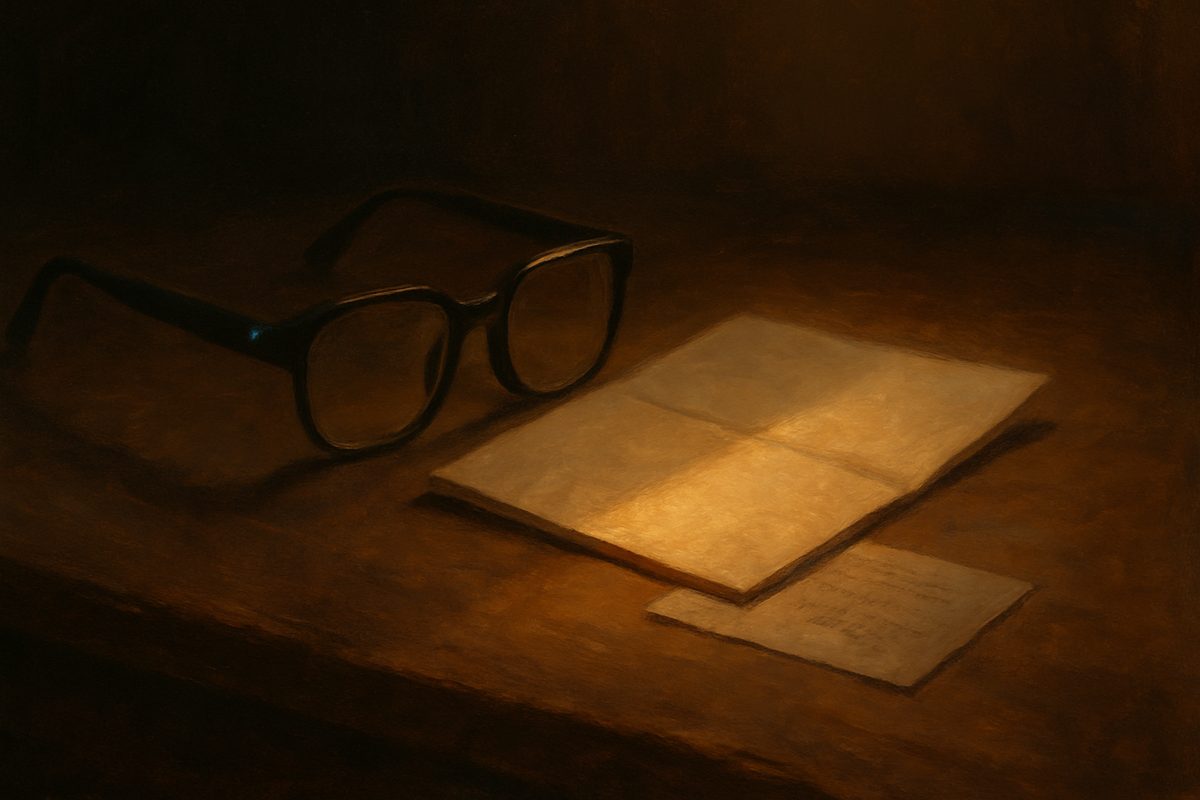
A blind writer describing her first day with a pair of camera glasses lists what they do for her: the weather before coffee, a letter read aloud, a bill, a menu, a small bag she dropped and could not find. Then she names the part that was hard. Pairing them required seeing a blue light.
That light is the whole argument, and it has just been used to ban the device from a hacker conference, 1,240 courthouses, an air force and a comic convention.
Two conversations that never meet
Search for smart glasses and privacy and you get the bans: DEF CON, New York State's courts, the US Air Force, a UK convention promoter — four institutions in seven months, none of which appears to have consulted any of the others. Every one of those stories reports the privacy case and stops.
Search for smart glasses and blindness and you get a different literature entirely. Be My Eyes, the service that connects blind users to sighted volunteers, runs on these glasses: a voice command calls a volunteer who sees through the camera and answers through the open-ear speakers, and the wearer can toggle between the glasses and their phone mid-call. The company has made the case for the form factor over a handheld phone. Meta markets the device to blind and low-vision users directly, which means the assistive use is not a fan community's workaround. It is a product line.
None of those pages mentions a ban. None of the ban stories mentions Be My Eyes.
The two conversations are about the same object and they have not been introduced.
What the device actually does for someone who cannot see
The concrete version matters, because "accessibility tool" is the kind of phrase that lets a reader move on.
Writing in ABILITY Magazine, Gina Velasquez describes an ordinary day with them. She asks for the weather. She has letters, bills and menus read to her. She uses them to look things up while writing, and puts the speed at one to two seconds. When she dropped a small plastic bag she asked the glasses where it went and was directed to it. Calls and messages happen without her hands leaving what she is doing.
She is equally direct about the limits. The glasses need a live internet connection and the phone app open. And being outside, she writes, still "feels like risky business" when she cannot see the curb, the traffic or the street signs. This is not a device that replaces sight. It reads text and answers questions, and the trade press covering low-vision practice treats it as one option among several rather than a solution.
That is the thing being carried through the door of a courthouse.
The indicator light fails in both directions
Put the two literatures side by side and they say something neither says alone.
Cybernews recorded DEF CON's reasoning for the ban in one line: there is no consistent way to tell whether a pair is recording. That is a statement about the indicator light. A bystander cannot read it — not across a room, not in bad light, not reliably enough to know whether they are being filmed. The entire privacy case rests on that failure.
And the first-person account says the wearer could not read it either. Setup was difficult precisely because it depends on seeing a small blue lamp.
One indicator is asked to carry the disclosure the whole arrangement depends on, and it does not work for the person being recorded or for the person recording. No source found draws that line — this is a reading, not a finding, assembled from two accounts that each state their half plainly. But it explains why the bans keep arriving in a shape that looks blunt. Every one of the four bans the device rather than the act, because from the outside there is nothing else to ban.
Three of the four bans cover prescription lenses
This is the detail most often dropped from the coverage, and it is where the cost lands.
DEF CON makes no exception, prescription included, and tells attendees to pack a second pair. New York's Unified Court System covers prescription smart glasses too, and its rule reaches more than 1,240 courts and applies to everyone entering, court staff and attorneys included. Anyone who arrives wearing them hands them to a uniformed officer at the door. The Air Force's January regulation makes them unauthorised in uniform on operational-security grounds.
There is a second problem underneath the first, and it is the one a door supervisor has to solve. A rule against recording glasses can only be enforced by recognising them, and the whole reason these four bans exist is that the device is hard to tell from ordinary eyewear. New York's answer is to take them at the entrance and hold them; DEF CON's is to say no exceptions and put the penalty on being caught filming. Both work by removing the judgement call from the doorway, because the judgement call cannot be made reliably. That is coherent. It also means the person who needs the device cannot make a case at the door either — there is nobody there whose job is to hear one, by design.
"Bring your other glasses" is a small instruction if the pair in question is a gadget. It is not a small instruction if it is the pair that reads the document you are about to be handed.
And note what a prescription exemption would mean in practice. A rule that let recording glasses through when they carried a prescription is a rule anyone could satisfy with an eye test. There may not be a workable exemption here. That is a real difficulty and not an evasion — but it is a difficulty, not an absence of cost.
What the law does and does not settle
It is worth being clear that the bans are not the law arriving. They are institutions acting where the law is quiet.
In the UK, filming people in public is broadly lawful. The Conversation's explainer sets out the distinction that matters: the recording is generally permitted, and it is publication of identifiable footage that engages data protection law, with purely personal use sitting outside UK GDPR entirely. Legal commentators applying this to this specific device and to the wider privacy problem reach the same place: the wearer is mostly within their rights until they share.
So a venue that does not want its guests filmed cannot rely on the law to stop it. It has to make a rule. That is exactly what a convention promoter did after paying guests said they were being recorded without consent — and that promoter's decision is the only one of the four that was reported with the accessibility trade-off attached.
The point is not that the bans are wrong
A courthouse has a specific legal duty about what happens in the room. A security conference full of people whose work depends on not being identified has an obvious interest. An air force worried about what a camera sees near classified work is not being precious.
The point is narrower, and it survives agreeing with all four decisions. A cost that is justified is not the same as a cost that has been counted. Three of these four rules reach the version of the device someone might actually depend on, and three of the four were reported without anyone asking what that means for them.
The reason is not malice. It is that the ban story and the accessibility story are filed in different sections, read by different people, and written by reporters who have no particular reason to know the other exists. That is how a cost goes uncounted — not by being dismissed, but by never appearing in the same paragraph as the decision that creates it.
Somebody will eventually walk into one of those 1,240 courthouses wearing the only glasses that read a summons aloud to them, and hand them to an officer at the door. Whatever the right answer to that is, it will be easier to reach if the question has been asked before it happens rather than after.
Related coverage
Meta Made the Recording Light Tamper-Proof — what the manufacturer and the lawyers have done since, and the accommodation duty this piece left open
Meta's Glasses Won't Train Its AI on Your Photos — the AI feature that reads a blind wearer their mail is the same one that sends the image to Meta and can train its model
Sources
- Be My Eyes: hands-free visual assistance on smart glasses
- Be My Eyes: why smart glasses are the next frontier in assistive tech
- Meta: AI glasses for people who are blind or low-vision
- ABILITY Magazine: a blind user's experience with these glasses
- Review of Ophthalmology: smart eyewear in low-vision practice
- The Register: DEF CON bans them, prescription included
- Cybernews: the stated reason — no consistent way to tell if it is recording
- NY State of Politics: New York's courts, prescription lenses covered
- Government Technology: 1,240 courts, staff and attorneys included
- DefenseScoop: the Air Force regulation and how other services differ
- The Conversation: the law on filming people without consent
- Doughty Street: this device, privacy and UK law
- BTO Solicitors: smart glasses and the privacy problem