Four Institutions Banned Smart Glasses in Seven Months
None of Them Talked to Each Other
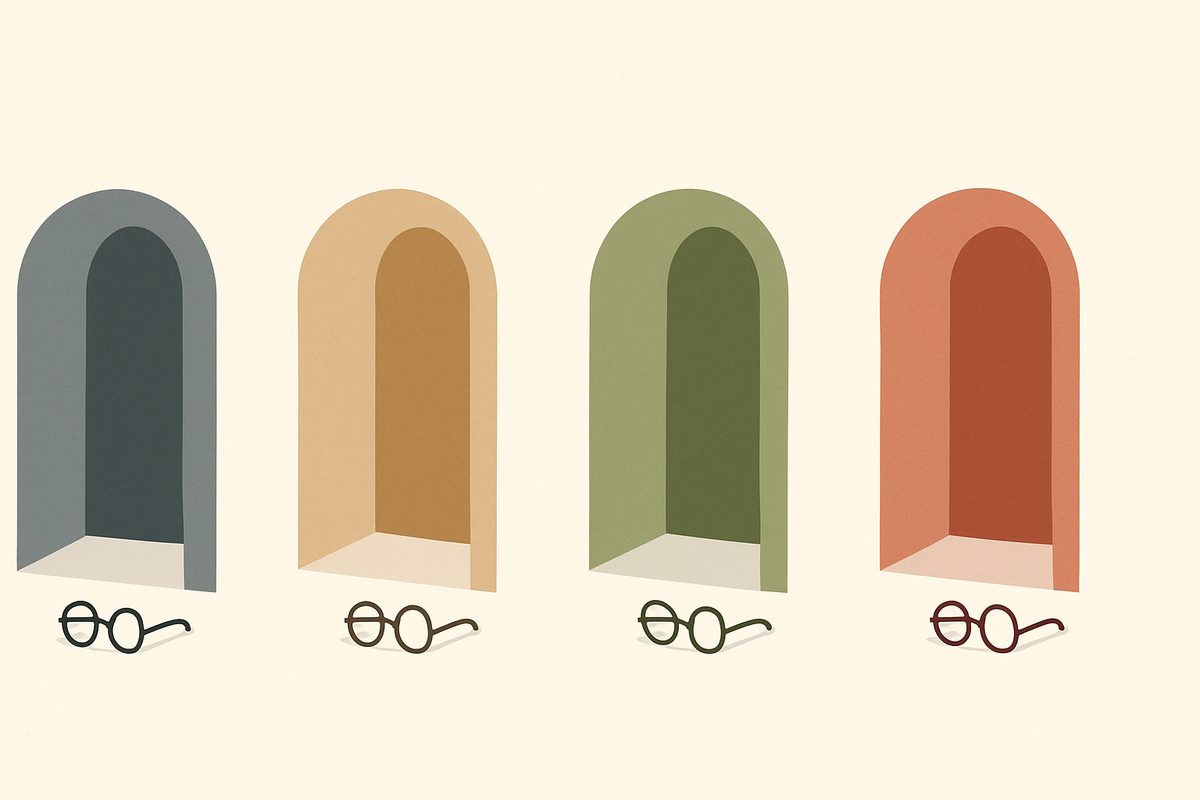
A hacker conference, 1,240 courthouses, an air force and a comic convention have almost nothing in common. Between January and July 2026, all four decided the same piece of consumer eyewear could not come through the door. They reached that decision separately, months apart, and for four reasons that do not resemble one another.
That is what makes the pattern worth reading. Four institutions with unrelated problems examined the same device and arrived at the same answer without any of them consulting the others.
The four decisions
January — the US Air Force. A uniform regulation update on 9 January made it unauthorised to wear smart glasses with photo, video or artificial-intelligence capability while in uniform. DefenseScoop reported that a Department of the Air Force spokesperson attributed the change to operational security, and noted that policies vary across the other services — some are experimenting with the same hardware for mission use. Military Times and Task & Purpose carried the same regulation. The concern is constant capture near information that is not supposed to leave.
That one is not a clean institutional verdict, and DefenseScoop is careful about it: the other services have not matched the Air Force, and some are actively testing whether the same hardware improves particular missions. So inside a single defence establishment the device is simultaneously a security liability and a candidate tool, depending on who is wearing it and where. That split is worth holding on to, because it is the strongest argument against reading the other three bans as a verdict on the technology rather than on a setting.
July — New York State's courts. From 20 July, eyewear and headwear containing cameras, microphones or other recording technology is not allowed inside any Unified Court System facility. Engadget noted that this made New York the first US state to impose a blanket ban rather than leave it to individual courts. The scope is unusually wide: Government Technology reported it covers more than 1,240 state, county, city, town and village courts and applies to everyone entering, court staff and attorneys included. Anyone arriving in them surrenders them to uniformed court officers. NY State of Politics reported that prescription smart glasses are covered too, and that the stated purpose is preventing secret recording of proceedings. The National Law Review noted that some courts in Wisconsin and Pennsylvania already refused them; New York is the first to do it statewide.
Late July — DEF CON 34. The security conference banned Meta-style glasses with recording capability outright. The Register reported that no exceptions are made, prescription lenses included, and that organisers told attendees to pack a second pair. Recording is still allowed at DEF CON — but with recognisable equipment, a phone rather than a frame, and with permission from the people in shot. CSO Online and SC Media reported the same policy. Cybernews recorded the reasoning: there is no consistent way to tell whether a pair is recording.
July — a UK convention promoter. Monopoly Events barred Meta glasses and other wearable cameras from three Comic-Con events after paying guests said they were being filmed without consent — the decision we covered when it happened.
The reasons do not match, and that is the point
Four bans, four rationales: an air force worried about what a camera sees near classified work; a court system worried about a proceeding being recorded in breach of state law; a security conference worried about attendees being filmed; a promoter worried about the people who paid to be there.
None of those problems is the same problem. A courthouse does not care about operational security. An air base does not care about convention guests. Yet each arrived at the same measure, and each arrived at it alone.
What that convergence describes is not a moral panic. It is a design property. The thing every one of these institutions objected to is identical, and it is not the camera — cameras have been in every pocket for two decades, and none of these bodies banned phones. What they banned is a camera that does not announce itself.
Cybernews recorded the DEF CON reasoning in one line: there is no consistent way to know whether the glasses are recording. That sentence, not any of the four policies, is the story. A phone held up is a signal everyone in the room can read. A frame on someone's face is not, and no indicator light has yet convinced four separate institutions otherwise.
What the four have in common, mechanically
Strip out the rationales and the four rules are near-identical in three ways, none of which is obvious from any single announcement.
They ban the device, not the act. None of the four asks whether you were recording. DEF CON still permits recording — with a phone, and with the consent of the people in frame. The line is not filming; it is filming with something nobody can see is filming.
They cover prescription lenses. This is the detail most often dropped in the coverage, and it is in three of the four: DEF CON tells attendees to pack a second pair, New York tells them to bring conventional glasses. A rule that exempted prescription frames would be a rule anyone could claim.
They put the burden at the door. New York's courts take the glasses into safekeeping with uniformed officers; DEF CON's penalty for surreptitious filming is removal without a refund. Nobody is checking a setting or an indicator. The enforcement is physical, because the alternative — deciding from across a room whether a frame is live — is the exact thing all four say cannot be done.
The cost nobody in this coverage is counting
Every one of these bans removes a second use along with the first.
The same hardware reads a menu aloud to someone who cannot see it. It identifies a sign, a platform number, a price. When a convention bars wearable cameras it also bars that, and the accessibility trade-off in the Comic-Con decision is the part that got least attention when the ban was announced.
New York's rule is the sharpest version. It covers prescription smart glasses, and it tells anyone who needs them to bring a conventional pair instead. For a person whose only prescription pair is the smart one, "bring your other glasses" is not a small instruction. DEF CON's version is the same: pack alternative eyewear, no exceptions.
That may still be the right call. A courthouse has a specific legal duty about what happens in the room, and it is not obvious how you write an exemption that a bad actor cannot claim. But it is a cost, it lands on a particular group of people, and of the four institutions here only the convention promoter's decision was reported with that cost attached.
What this does and does not tell you
Four institutions is four institutions. It is not a movement, and nothing in any of these announcements says one is coming. Three of the four landed inside three weeks of each other, which is suggestive of nothing on its own — the Air Force's came six months earlier, and the other services still have not matched it.
What can be said is narrower and more useful. As of mid-2026, if you own a pair of recording glasses, the number of ordinary places you cannot wear them is no longer zero, and the list is not confined to obviously sensitive venues. A comic convention is on it. The list also does not depend on whether you were recording. Every one of these four bans the device, not the act — because none of them can tell the difference from the outside, which is exactly the complaint.
The same question is arriving elsewhere in a different costume. The EU's AI Act reaches its most consequential phase with one small sentence — a label telling you the thing you are talking to is artificial. Disclosure is the mechanism in both cases: not banning a capability, but requiring that it be visible. Glasses are the case where nobody has worked out how to make it visible yet.
Related coverage
The Mummy's Poster Was Banned From the Tube, Not the Film — both take a 'ban' headline apart to show it names one narrow, specific restriction rather than a blanket prohibition
Sources
- The Register: DEF CON bans Meta-style 'pervert glasses'
- CSO Online: DefCon bans smart glasses with recording capabilities
- Cybernews: DEF CON bans Meta AI glasses over privacy fears
- SC Media: DEF CON bans Meta smart glasses due to privacy concerns
- Engadget: New York is the first US state to ban smart glasses in all its courthouses
- Government Technology: New York will ban smart glasses from all courthouses
- NY State of Politics: Smart glasses set to be banned in New York courts
- National Law Review: AI glasses not a good look in New York courthouses
- DefenseScoop: Air Force bans Meta AI glasses over OPSEC concerns
- Military Times: Wearing smart glasses in uniform jeopardizes OPSEC, Air Force says
- Task & Purpose: Air Force bans smart glasses for troops in uniform