BP Is Selling Its North Sea Oil Business After 60 Years
the First Big Move of a New Boss Who Has $20 Billion of Assets to Shed
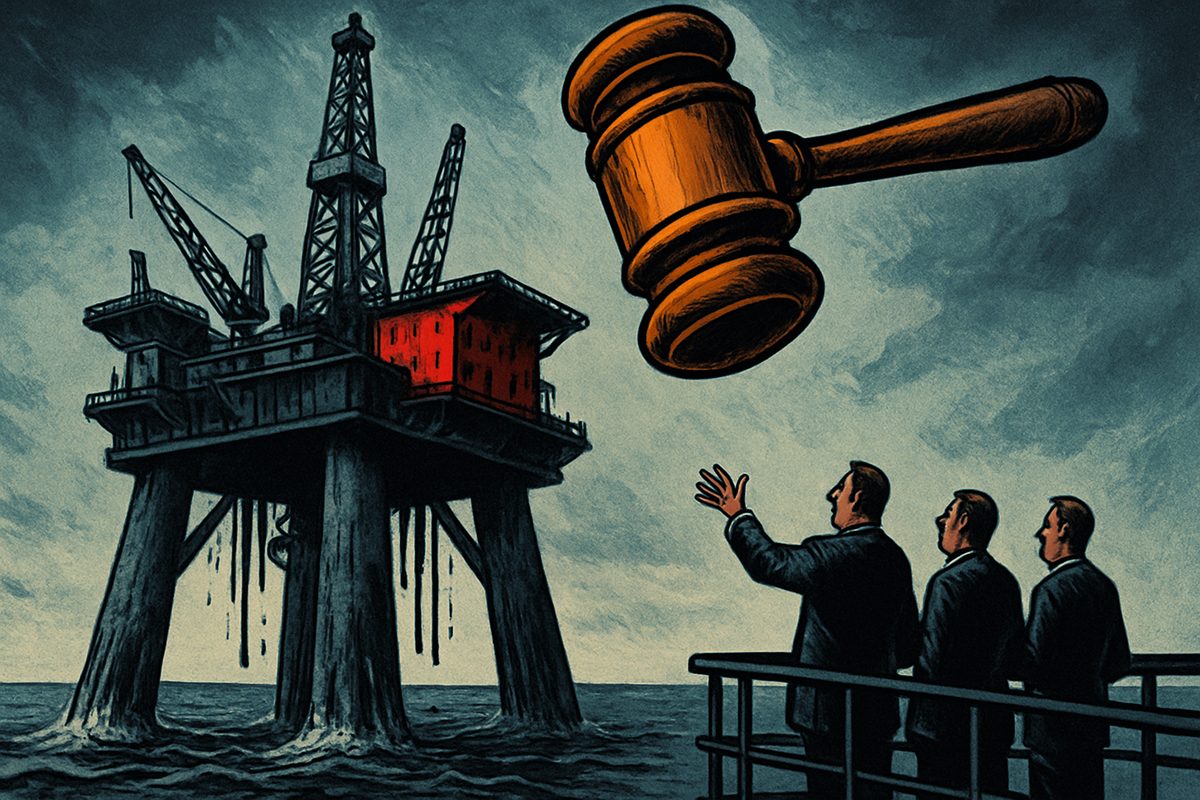
117,000 barrels a day. That is roughly what BP pulled out of the British North Sea last year — about one barrel in every twenty it produces anywhere on Earth — and on Friday, 31 July 2026, the company put all of it up for sale. After more than sixty years drilling the waters between Britain and Norway, BP is looking for someone else to own the business it built there.
Read the verbs carefully, because the difference matters and a lot of headlines will blur it. BP has not sold anything. It has launched a formal process to market the North Sea business — the corporate equivalent of putting a house on the market and waiting to see who calls. No buyer has been named. No price has been agreed. What happened on Friday is that BP told the world the business is for sale and started taking offers. Everything past that is, for now, a blank.
The number BP has to hit, and why the North Sea drew the short straw
The clearest way to understand Friday is to start with the figure driving it: $20 billion. That is how much BP says it intends to raise by selling off assets by the end of 2027, and the North Sea sale is a step toward it, not the whole of it. When a company sets a disposal target that large, the question stops being is this business any good and becomes is this business worth more to us than the cash it would fetch. BP's answer, for the North Sea, is now on the record.
Chief executive Meg O'Neill put it in the careful language of a company that does not want to insult the region it is leaving. "The North Sea remains integral to the UK's energy system," she said. "However, as we focus our portfolio and direct capital to our highest-value opportunities, we believe our North Sea business will be better positioned as part of another company." Strip out the diplomacy and the sentence says something simple: this is a fine business, it is just not our best business, and the money tied up in it can work harder somewhere else.
Focus is the watchword of the 2026 boardroom, and BP is not making the argument alone. It is the same instinct now reshaping big companies from the top down — the one taking Electronic Arts off the public market entirely in a $55 billion buyout, on the pitch that a company is worth more when it answers to fewer masters and chases fewer things. Investors have spent this summer rewarding exactly that kind of discipline: it is a large part of why Apple briefly touched $5 trillion by spending less on the AI race, not more. The market's mood right now pays for concentration, and BP is reading it.
What is actually inside the "For Sale" sign
The North Sea business is not a single field with a single valve. BP operates five major production hubs in the region, the largest of which sits on the Clair oilfield — the biggest field on the entire UK continental shelf. Together they made up about 5% of BP's global oil-and-gas output last year, out of a company total of roughly 2.3 million barrels of oil equivalent a day. In other words, this is a real and producing business, but a small slice of a very large company: losing it does not change what BP fundamentally is.
There is a second detail worth pinning down, because it is easy to fold into the headline sale by mistake. Separately from the marketing process announced Friday, BP has already agreed to sell its stake in the Culzean field, a move that on its own trims UK output by around 25,000 barrels of oil equivalent a day. That is a done piece; the wider North Sea sale is not. Two things are happening to BP's UK portfolio at once, at two different speeds, and only the smaller one has actually closed.
The boss who ordered it has been in the chair five months
If the decision feels like a new hand on the tiller, that is because it is one. Meg O'Neill became BP's chief executive on 1 April 2026 — four months before Friday's announcement. She arrived from Woodside Energy, Australia's largest listed energy company, which she had run since 2021 after joining in 2018 and, before that, spending 23 years at ExxonMobil.
She replaced Murray Auchincloss, who stepped down as chief executive and board director on 18 December 2025; Carol Howle, BP's head of supply, trading and shipping, held the role on an interim basis until O'Neill arrived. BP's chairman, Albert Manifold, framed the appointment at the time around exactly the quality now on display: her "proven track record of driving transformation, growth and disciplined capital allocation," he said, "makes her the right leader for bp." Putting the North Sea up for sale inside her first five months is that mandate turned into an action. A new chief executive announcing a portfolio she did not design is a very common way for a big company to change direction without anyone having to say the old direction was wrong.
1,100 people work there — and a second number that is not about them

Here is the figure a reader in Aberdeen cares about most: 1,100. That is how many people BP employs in its North Sea business, and their futures are the part of this story a press release cannot settle. In a sale, staff usually transfer to the new owner — but who that owner is, and what they keep, is precisely the blank BP left open on Friday. Until a buyer exists, no one can honestly tell those 1,100 people what happens next.
There is a separate workforce number in the coverage, and it is important not to weld the two together. BP has disclosed plans to cut about 700 roles across the company — a group-wide reduction, not a count of North Sea redundancies caused by this sale. The two numbers live in the same news week and describe different things. Anyone who reports "BP is cutting 700 North Sea jobs" has stitched together two figures that do not belong in the same sentence, and this piece will not.
No buyer, no price, no date — and why that is the honest headline
The temptation with a story like this is to fill the blanks, because the blanks are where the drama would be. Resist it. As of Friday there is no named buyer, no agreed price, and no completion date. A specific valuation floated through some early coverage; it traces to a single unattributed estimate, not to anything BP or a bidder has said, so it stays out of this article. Historically the buyers for maturing North Sea assets have been smaller operators and private-equity-backed firms rather than the other oil majors — but "historically" is a pattern, not a prediction, and naming a specific buyer today would be a guess dressed as a fact.
It is also worth resisting the neat political explanation. Britain's windfall tax on oil-and-gas profits is real, and it is genuine background to why the North Sea is a harder place to make money than it was a decade ago. But BP did not cite it as the reason on Friday, and putting the decision down to a single cause it did not name would be inventing motive. The stated logic is the portfolio one: focus the company, hit the $20 billion target, put this business where it can do best. That is what BP said, so that is what this piece reports.
Where this leaves you
BP has put its UK North Sea oil-and-gas business — five production hubs, the Clair field, about 117,000 barrels a day and 1,100 staff — up for sale, six decades after it started drilling there. It is the first headline move of chief executive Meg O'Neill, five months into the job, and a down payment on a plan to raise $20 billion by the end of 2027. What is missing is everything that would make it a deal rather than an intention: a buyer, a price, a date, and an answer for the people who work there. Watch for those, and treat any confident version of them that arrives before BP confirms it as a guess.
Sources and verification
This article is built only from reports we opened and read on 31 July 2026. BP's own press release could not be retrieved directly, so no figure here rests on it; every number was taken from a full-text news report instead.
- The launch of the sale, the five hubs, the Clair field, the ~117,000 boe/d (~5% of a ~2.3m boe/d total), the 1,100 North Sea staff and Meg O'Neill's quote were read across a Reuters report, Global Banking & Finance, Euronews, RTÉ, Michael West Media and AOL UK.
- The $20 billion disposal target by end-2027, the separate Culzean stake sale (~25,000 boe/d) and the ~700 company-wide role reduction were read in the Global Banking & Finance and Reuters reports.
- The leadership change — O'Neill taking over on 1 April 2026 from Woodside, Auchincloss stepping down on 18 December 2025, Carol Howle as interim CEO and chairman Albert Manifold's quote — was read in Yahoo Finance, WorkBoat and the Journal of Petroleum Technology.
- Kept out for want of a primary source: any named buyer or price, any completion date, the unattributed valuation figure, and the windfall tax as a stated reason. See this article's ban list.