Trump Says He Will Open a Section 301 Investigation Into the EU Over Its Tech Fines—Here Is What That Power Can and Cannot Actually Do
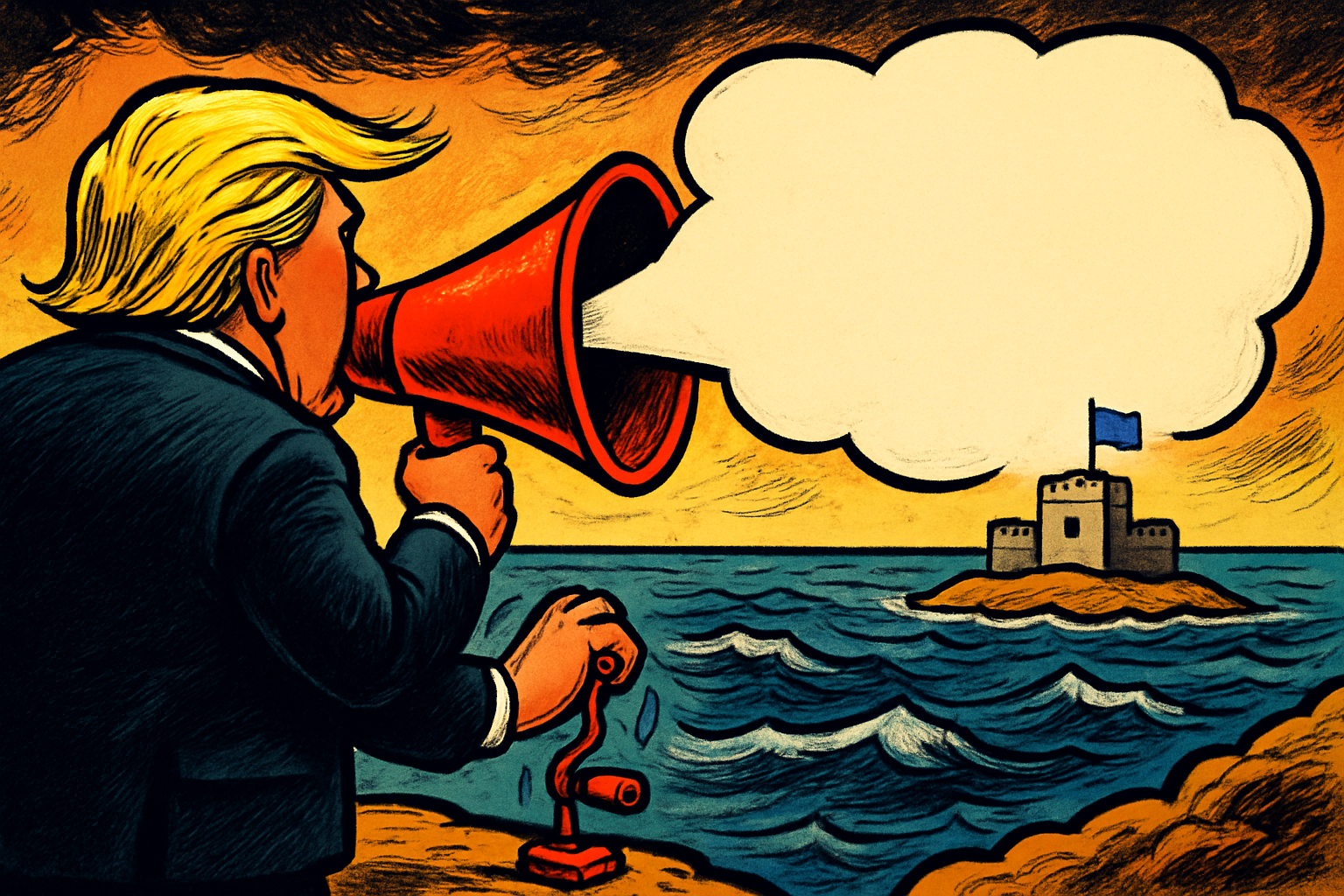
One day after the European Union fined Google 890 million euros, President Donald Trump said the United States would hit back. In a long post on his Truth Social account on Friday, 24 July 2026, he wrote that Washington would "immediately initiate a 301 Investigation" into the way Europe treats American technology companies, and he predicted "a substantial TARIFF" on the EU "at the earliest possible moment."
That is a big threat wrapped around a fairly specific legal instrument, and the two do not line up as neatly as the post suggests. So let me separate the parts: what Trump actually said, what the EU actually did to set him off, which of his numbers hold up, and what a Section 301 investigation can and cannot do to a fine issued in Brussels. The gap between the announcement and the machinery is the whole story.
What Trump actually posted
The post is worth quoting directly, because the tone is part of the news. "The United States of America is not a 'PIGGYBANK' for Europe, nor will we allow it to be!" Trump wrote. He said the country would "immediately initiate a 301 Investigation into the practice of 'ROBBING' American Companies," and framed the EU's enforcement as an attack: "The European Union is at it again and, as usual, taking direct aim at GREAT American Companies!"
He then listed the companies and the sums he says they have been fined: "After having fined Apple, for no reason at all, 15 Billion Dollars, Meta, 3 Billion Dollars, Amazon 2.5 Billion Dollars, and many others, we have just been informed that Google, a truly advanced and amazing group, has been fined yet another 1 Billion Dollars, without explanation. This brings the Google total to over 18 Billion Dollars!"
And he set out what he expects to happen: "The penalties will be entirely reversed and, we anticipate, a substantial TARIFF to be placed on them at the earliest possible moment." Elsewhere he warned that "The European Union will pay a very big price for this illegal and highly unethical conduct, which I have consistently warned them about."
Two things to hold onto before going further. First, those dollar figures are Trump's own, stated in a social-media post; they are not totals published by the EU. Second, "we will immediately initiate" is a statement of intent. Every report I was able to read describes an announcement, not a case that has been formally docketed, argued, or decided.
What the EU actually did
The trigger was real and it is on the record. On 23 July 2026, the European Commission fined Google 890 million euros for two separate breaches of the Digital Markets Act, the bloc's law governing large "gatekeeper" platforms. The Commission's own page splits the penalty in two: 460 million euros for self-preferencing in Google Search—giving Google's own "shopping, hotels, transport and sports results" a better position than rival services—and 430 million euros for steering restrictions on Google Play, meaning limits on what app developers may tell their own customers about cheaper options elsewhere.
That 890 million euros is roughly a billion dollars, which is the "1 Billion Dollars" figure in Trump's post and in the wire coverage. It is a fine—money Google must pay—not a tax bill or a court settlement. We covered the decision itself in detail when it landed; this new story is the political reaction to it, not a fresh EU action.
Which of the numbers hold up
Here is where the post and the paperwork part ways. The only figure I can trace to the authority that issued it is the Google fine: 890 million euros, from the European Commission, on 23 July. The rest of Trump's list—15 billion dollars for Apple, 3 billion for Meta, 2.5 billion for Amazon, and a running "over 18 Billion" total for Google—are his characterization, and I have not confirmed those totals at the bodies that would have imposed them.
There is good reason to treat the Apple number in particular with caution. Reporting on the post notes that the 15-billion-dollar figure appears to bundle together separate European cases from different years, including a back-tax recovery order that is not a fine at all. In other words, the sum reads as a lifetime tally of everything Europe has ever demanded of the company, mixing tax-recovery orders with competition penalties, rather than a single fine anyone was just handed. I am flagging that rather than reproducing the breakdown as fact, because I did not open the underlying decisions myself. What I can say cleanly is this: one verified fine of 890 million euros sits underneath a post that gestures at more than twenty billion dollars.
What a Section 301 investigation actually is
Section 301 is a provision of the US Trade Act of 1974. It is run by the Office of the US Trade Representative, an executive-branch office, and it lets the United States investigate another country's trade practices and, if it judges them unfair, respond—most often by placing tariffs on that country's goods. It is a real and recurring tool: the USTR keeps a public list of live Section 301 investigations covering everything from intellectual property to shipbuilding. It is also the same authority behind the China tariffs of Trump's first term, so the mechanism is familiar and the tariffs it can produce are genuine.
But notice what it is aimed at. Section 301 is a domestic US process that ends in US tariffs on imports. It is a lever Washington pulls on its own side of the Atlantic. That matters for the loudest promise in the post.
The one thing it cannot do: reverse the fines
Trump wrote that "the penalties will be entirely reversed." A Section 301 investigation cannot do that. A European Commission fine is a legal decision taken under EU law; the only bodies that can overturn it are the EU's own courts, the General Court and the Court of Justice of the European Union, and only if Google appeals and wins there. No US president, and no US Trade Representative, has authority over a Commission decision. None of the reports I read described any mechanism by which American action could cancel a European fine—because there is not one. Tariffs on European goods could raise the cost of the dispute for Europe and become a bargaining chip; they cannot erase the 890-million-euro penalty from Google's ledger. Reversal and retaliation are being spoken of in one breath, but they run on completely different tracks.
What we could not verify
Several things that would sharpen this story were not available in the sources I could open, and it is more honest to name the gaps than to paper over them.
- No tariff figure. The post promises "a substantial TARIFF" but names no rate and no dollar amount. Any specific percentage you see attached to this story is not coming from Trump's words as reported.
- No EU reply. The reports I read carried no response from the European Commission or any named EU official to the threat itself. If Brussels answered, I have not confirmed it. That silence may simply mean the reaction had not landed when the wire copy was filed.
- Announced, not filed. The coverage describes an announced intention to open a Section 301 case, not a case that has been formally initiated on a USTR docket, and certainly not one that has reached any finding. Nothing has concluded.
- BBC and the Guardian were unreachable from where I am working, so this account leans on Associated Press copy, the Washington Times, NOTUS, and the European Commission's own pages rather than those two outlets.
Why it matters
Strip away the capital letters and the picture is a straightforward escalation of a fight that has been building all year. Europe has spent 2026 turning the Digital Markets Act from a set of findings into actual fines—first the order to open Android to rival AI services on 16 July, then this 890-million-euro Google penalty on 23 July. Each of those was a regulator flexing a new law. Trump's post is the first time that enforcement has been met with a threat of tariffs rather than a legal appeal, which drags a competition dispute into trade policy, where the weapons are blunter and the collateral is everyone who ships goods across the Atlantic.
For readers, the practical takeaway is smaller than the volume suggests, at least for now. A fine stands in Brussels. A tariff has been threatened in Washington but not set, and none is in place. An investigation has been announced but not begun in any formal filing I could see. The one number that is fully verified—890 million euros—is also the smallest one in the story. Everything larger is, so far, a claim or a promise. Worth watching for whether the USTR actually opens the case, and whether the EU says anything back. We will follow both.
Sources
- https://digital-markets-act.ec.europa.eu/commission-fines-google-eur890-million-breaches-digital-markets-act-2026-07-23_en
- https://ec.europa.eu/commission/presscorner/detail/en/ip_26_1670
- https://www.washingtontimes.com/news/2026/jul/24/trump-vows-crack-europe-add-tariffs-battle-hefty-fines-us-tech/
- https://www.wsls.com/business/2026/07/24/trump-says-us-will-investigate-eu-trade-practices-claiming-the-bloc-unfairly-fined-us-tech-giants/
- https://spectrumlocalnews.com/us/snplus/politics/2026/07/24/trump-u-s--investigation-european-union-fines-technology-companies
- https://www.notus.org/trump-white-house/european-union-tariff-threat-tech-company-fines
- https://ustr.gov/issue-areas/enforcement/section-301-investigations
- https://lifepivo.com/eu-google-app-favouring-fine/
- https://lifepivo.com/eu-google-android-ai-interoperability/