Chad le Clos Became the Most Decorated Commonwealth Games Athlete in History - On the Same Night the Pool Produced a Dead Heat for Gold
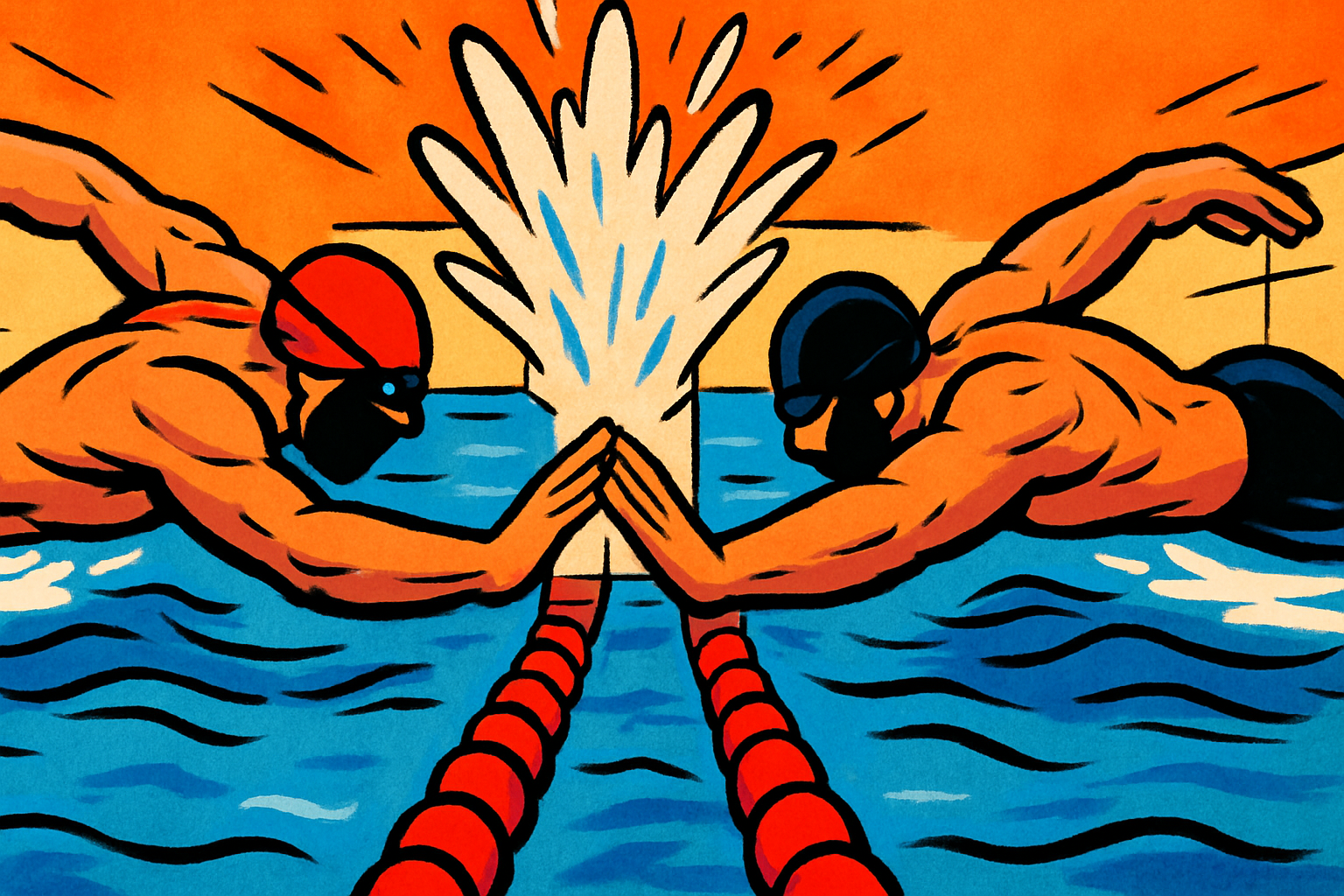
Some nights at a major Games are remembered for one result. The swimming session on Wednesday, 29 July 2026 at the Glasgow 2026 Commonwealth Games produced two that will outlast the meet, and they happened in the same pool within an hour of each other. In one lane, a 34-year-old South African touched the wall for a bronze medal that rewrote a record book stretching back decades. In another final, two Australians hit the pad at the identical time, to the hundredth of a second, and could not be separated for gold.
This is the story of both, told carefully. Where a number or a quote appears below, it is because I opened the report it came from and read it. Where the sources disagreed or went quiet, I have said so rather than smoothing it over. A swimming night generates a blizzard of statistics, and not all of them survive being checked.
The headline result: le Clos, alone at the top
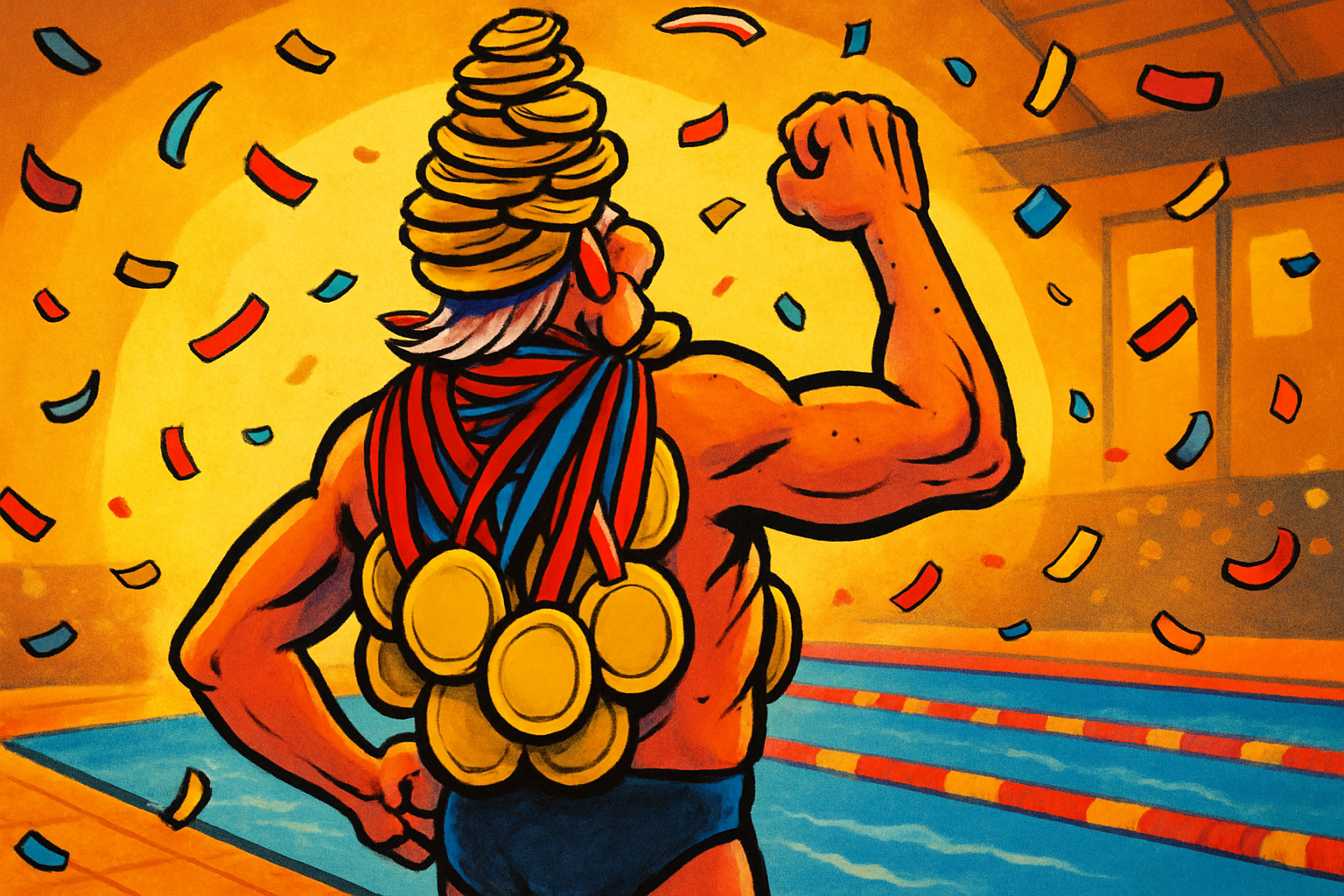
South Africa's Chad le Clos swam the butterfly leg for his country's bronze medal in the men's 4x100m medley relay. According to the Glasgow 2026 organisers' own report, that bronze was his 21st Commonwealth Games medal, and it made him the most decorated athlete in the history of the Commonwealth Games, across all sports. He now stands alone at the top of a list that spans every event the Games have ever contested, not only the pool.
The medal that put him there was, fittingly, a shared one - a relay, not a solo swim. His full Commonwealth haul, as reported by Times LIVE, breaks down as seven gold, five silver and nine bronze. That is a career built across five editions of the Games, and at Glasgow he added three medals to it: a bronze in the men's 4x100m freestyle relay, a silver in the mixed 4x100m medley relay, and the men's 4x100m medley bronze that carried him past the record. South Africa's time in that final medley relay, per the full swimming results, was 3:31.13, an African record.
The mark he overtook belonged to Australia's Emma McKeon, who had held the Commonwealth record with 20 medals. Passing her clearly meant something to le Clos, because the chase had a history to it. "To stand alone in history is unbelievable," he said afterwards, in remarks carried by the Games organisers. "Four years ago, I needed one more medal, then Emma (McKeon) came past me, and suddenly I needed three more." It is a rare thing for an athlete to describe a record this dryly and this honestly at once - he was one medal away, watched the target move, and then went and closed a three-medal gap over the following years.
I want to be precise about what this record is and is not. It is the most Commonwealth Games medals by any athlete, in any sport, in the history of the Games. It is not a claim about the Olympics, and it is not a "most decorated swimmer of all time" line - those are different tables, and the sources I read made the Commonwealth-specific claim and no larger one. The larger versions get repeated online because they sound bigger; they are not what was verified, so they are not here.
The dead heat: two Australians, one time, one gold each
In the men's 50m butterfly, the clock did something it very rarely does over a single length: it refused to pick a winner. Kyle Chalmers and Ben Armbruster both touched in 22.73, a Games record, and shared the gold. Their compatriot Cam McEvoy took bronze in 22.92, making it another all-Australian podium - the sixth time in Glasgow, according to Swimming World Magazine, that Australia's swimmers had swept all three places in a final.
What makes the tie stranger is that it was not the first time these two had matched each other stroke for stroke that week. In the semifinal, Chalmers and Armbruster had also finished level, both clocking 22.82 - which, as Swimming World noted, was one hundredth of a second off the Games record set by England's Ben Proud back in 2022. So the pair tied in the semi, then went out in the final and tied again, this time fast enough to take the record down together. Over two 50-metre sprints, across two separate races, the difference between them was exactly nothing.
For Chalmers the result carried an extra wrinkle. It was his ninth Commonwealth Games gold, but the first he has won in any stroke other than freestyle - a notable line for a swimmer whose reputation was built on the sprint front-crawl events. McEvoy's night, for his part, was not confined to that butterfly bronze: he had already won the 50m freestyle and helped Australia to victory in the men's and mixed 400m freestyle relays.
A dead heat is one of those results that feels like a glitch and is in fact the system working exactly as designed. Swimming times the wall to the hundredth of a second and, by long-standing rule, does not break a tie at that level with thousandths. Two swimmers who touch within the same hundredth are declared equal, both given the gold, and no silver is awarded in the event. It is not a fudge; it is the honest outcome of a race that genuinely had no single winner.
Australia's record haul in the pool
Le Clos's milestone landed on a night that also belonged, statistically, to Australia. By the close of the swimming and para-swimming programme, the Glasgow 2026 organisers reported, Australia had won 37 gold medals and 76 medals in total across the pool events - a Commonwealth Games record for the country, past the 28 golds and 73 medals it had managed at Gold Coast 2018.
That is the figure I am confident in, because it came from the organiser's report and is specific to the swimming programme. I am deliberately not giving you Australia's overall, all-sport medal-table total for the Games, even though numbers for it are floating around, because I could not open a source that stated it and I am not going to reprint a tally I have not read. The swimming record is real and sourced; the wider medal-table number is the kind of thing that looks authoritative and turns out to be a search-box guess, and those are exactly what this desk got burned on before.
The pattern of the meet, though, is not in doubt. Sweep after sweep - six of them by the time of that butterfly final - is what a genuinely dominant swimming nation looks like when it brings a full-strength squad to a home-continent time zone and a fast pool. The dead heat was the loud, once-in-a-Games moment; the 37 golds are the quiet, grinding evidence underneath it.
Where this sits in the rest of Glasgow 2026
The pool has been the engine room of these Games, but it has not been the only place records have fallen. On the track a few nights earlier, a Commonwealth 100m record that had stood for 28 years finally went down in genuinely miserable weather - the story of a Commonwealth Games 100m record broken in the pouring Glasgow rain is a reminder that Glasgow's marquee moments have not all come on warm, easy evenings. And in the arena, the tension of a medal decided by a single closing routine played out in the gymnastics, where Abi Martin's last routine of the night held England's bronze together in a team final that was not settled until the final rotations.
Put together, they make the shape of these Games fairly clear: an Australian procession in the water, individual milestones for athletes from smaller delegations who seized their moment, and a handful of results - a 28-year record, a two-way tie for gold, a career-topping 21st medal - that will still be quoted long after the medal table itself has been filed away.
What I could not pin down
In the interest of being straight with you: two smaller details did not make it into the account above because I could not verify them from a source I actually opened. The organisers' report and another outlet gave different competition-day numbers for the session, so, since they agreed on the calendar date, I have used the date - Wednesday 29 July 2026 - and left the day-number out entirely. And I have not attributed a gold/silver/bronze breakdown to Emma McKeon's previous record of 20, because only her total was confirmed to me, not how it was composed. Neither gap changes the story. Both are the sort of thing worth saying out loud rather than papering over.
What is not in question is the pair of results the night will be remembered for. Chad le Clos is, on the record and across every sport, the most decorated athlete the Commonwealth Games have ever produced. And in the 50m butterfly, for the length of one perfect sprint, two swimmers were so exactly equal that the sport did the only honest thing it could and handed them a gold each.