Ish: the black-and-white Luton debut that won over Venice, and reaches UK cinemas this week
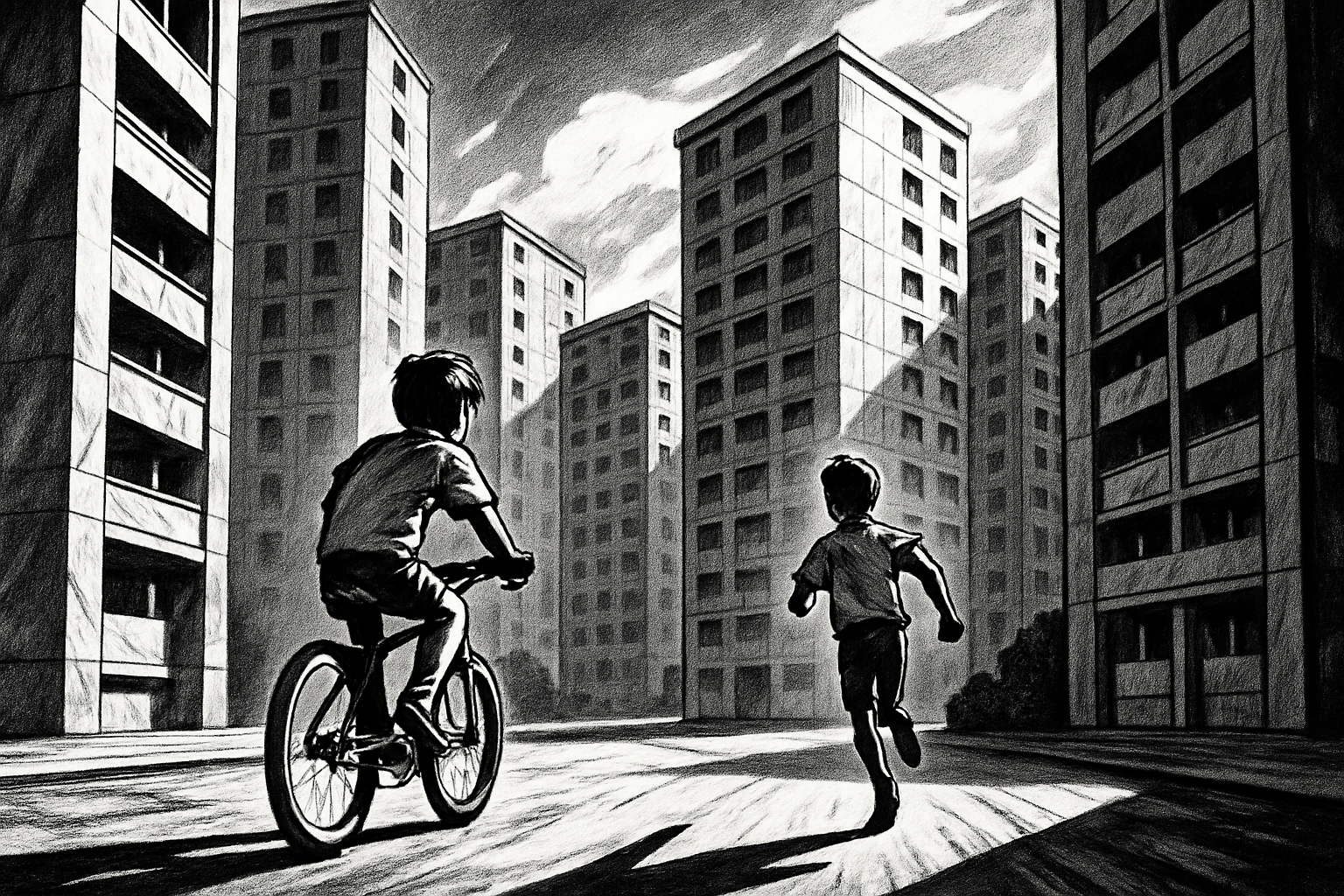
Here is the fast version. Ish is the first feature film by Imran Perretta, a British artist who had never directed a movie before. It is a coming-of-age story about two twelve-year-old best friends in Luton, shot entirely in black and white, and it is largely drawn from something that happened to Perretta himself as a boy: being pulled off the street and questioned by police. It won the Audience Award in the Critics' Week strand at the 2025 Venice Film Festival, went on to compete at the BFI London Film Festival, and it opens in cinemas across the UK and Ireland on 31 July 2026 through BFI Distribution. The Guardian has called it the British debut movie of the year. This piece lays out what is actually confirmed about the film and its maker, and flags the few details the sources do not agree on.
What the film is
Ish follows Ish (played by first-time actor Farhan Hasnat), a twelve-year-old boy in Luton, and his best friend Maram (Yahya Kitana). It is their last summer of boyhood: young enough still to build dens in the woods and pick blackberries, old enough that the adult world is starting to press in. Ish's mother has just died, and his family is dazed by grief. Maram, already taller and further along toward adolescence, is drifting toward older boys and trouble.
Then a police stop and search happens, and the film turns. As the official Critics' Week synopsis puts it, the two friends "wrestle to hold onto their friendship, in the wake of a traumatic police stop & search," trying to "make sense of the men they are becoming." Joy Crookes plays Ish's older sister, Samira, with Sudha Bhuchar and Avin Shah among the wider family. It is a small, intimate story told at a child's eye level, which is exactly why the comparisons it has drawn are to films like Ken Loach's Kes and Satyajit Ray's Apu trilogy rather than to grittier British teen dramas.
That distinction matters to Perretta. "It's nice that people have compared Ish to those films rather than Kidulthood," he told the Guardian, admitting he had worried the setting and the slang would invite the lazier comparison. "I did worry about that."
The real event behind it
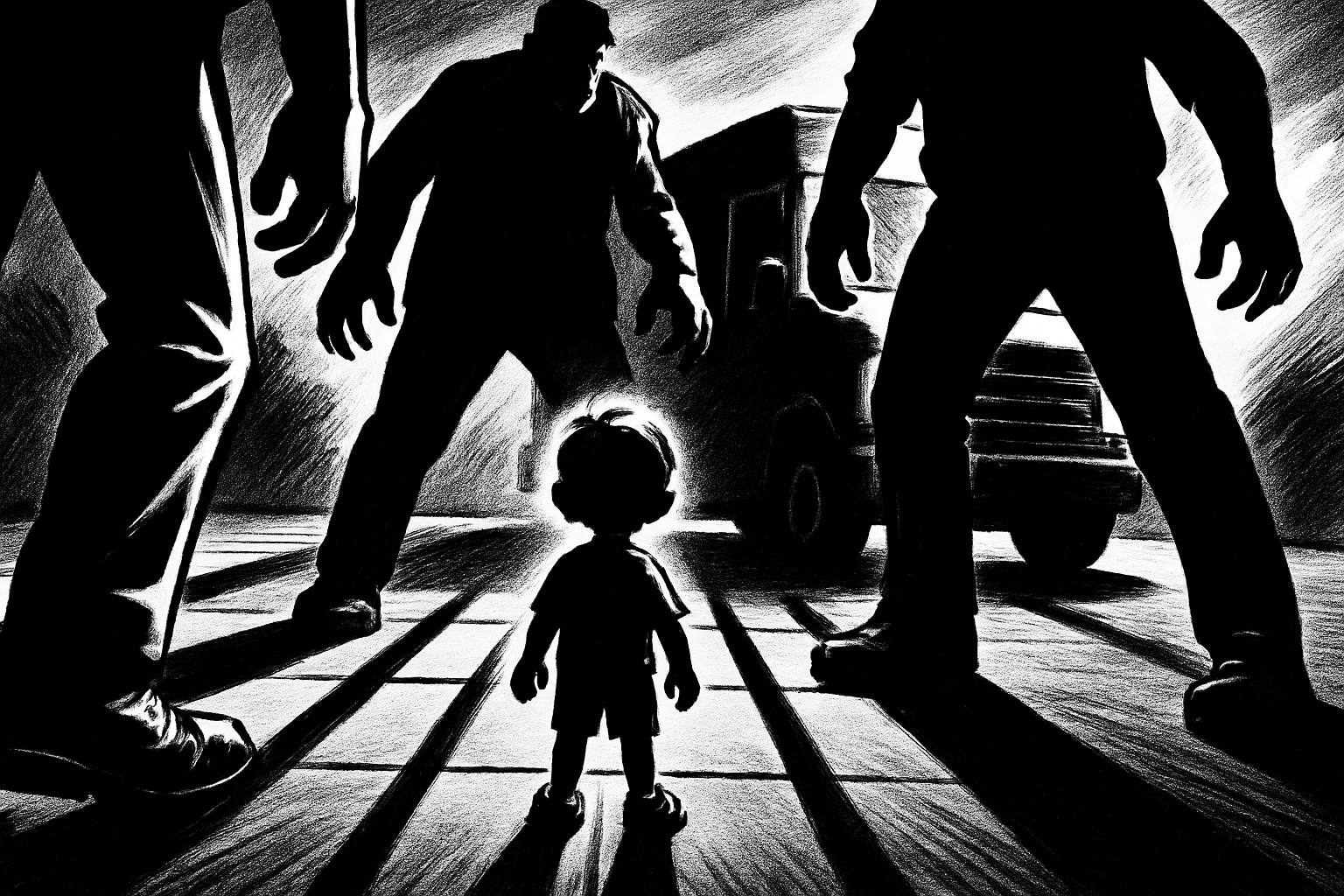
The film is fiction, but its spine is autobiographical. Perretta was thirteen, in the years just after the 9/11 attacks and the wave of Islamophobia that followed, when he was first stopped and searched.
"My mate got away," he told the Guardian. "They pulled me into a van and just started asking me loads of weird questions. I was so young, I didn't really understand what was going on. It was incredibly traumatic. That was 100% the moment in my childhood when I lost my innocence. Because I understood how I was seen outside my family home, outside school, outside the community, all these protected spaces. In that moment, I understood I was seen as a deviant or some sort of threat."
That, he says, is what politicised him and set him on the path to making work about it. He connects the film to more recent cases: the treatment of the schoolgirl known as Child Q, and accounts of children questioned under the government's anti-extremism Prevent strategy without a parent or teacher present. "It happens to children from certain backgrounds more than others," he said. "I wanted to explore what it means to drag children into the adult world before their time."
Grief is the film's other engine, and that too is personal. Perretta's mother, born in Bangladesh, worked as a child-protection social worker — "super political, a firebrand," in his words — and died of cancer when he was twenty-one. He had been one of her carers as a teenager. "After she died, I thought: I have to dedicate my life to doing the things that I want to do," he said. Trained first as an architect, he walked out of a job spacing toilet cubicles at a high-profile firm after a week. "Life's too short to design toilets."
How an artist ended up directing a film
Perretta did not come up through film school. He is a visual artist — one of ten given a £10,000 Turner bursary in 2020, the year the Turner Prize itself was cancelled during the pandemic — whose video installation The Destructors, about the lives of young Muslim men, is currently on show at Tate Britain. It was that work that opened the door: Rose Garnett, then the head of BBC Film, saw it in a London gallery and approached him to write a film treatment. "Not in a million years did I think I would ever get to do that," he said. "That's something that happens to other people."
To turn a treatment into a screenplay, he brought in the Irish playwright and screenwriter Enda Walsh, whose credits include Steve McQueen's Hunger. Walsh's involvement began almost by accident, when his agent slipped Perretta's early draft into a pile of summer reading. "I loved it," Walsh told Totally Dublin. "There were so many things in it that grabbed me and I just thought, this is really beautiful." His stated aim was restraint: "My job was just to make sure that there's space in it. Space for an audience to sit in it, and for the characters to be in it."
The most striking production fact is how much of Ish is Perretta himself. According to Laura Dos Santos, BFI Distribution's head of acquisitions, "It is an impressive achievement for Imran Perretta to have directed, penned and scored Ish — his gorgeously immersive, empathetic feature debut." He wrote it, directed it, and composed its music.
Casting two boys who turned out to be old friends
The single decision the whole film rests on was casting its two leads, and both are first-time actors. Perretta and producer Dhiraj Mahey spent about six months auditioning roughly 900 local boys in Luton; by the film-makers' account, only one of the finalists had ever acted before.
"We put Yahya and Farhan together," Perretta told Totally Dublin, "and it was just instant magic. It was absolutely electric straight away." Only later did the film-makers learn why the chemistry was so unforced: the two boys had known each other since childhood and had kept it quiet, afraid the connection might count against them in the audition. Directing them, Perretta said, was mostly a matter of staying out of the way — "letting them do what they do naturally, which is basically wind each other up."
Working with children also shaped the schedule. Under the laws protecting child actors, the young cast could only be on set for six hours a day, so the shoot ran short and fast, over roughly five weeks in Luton in the summer of 2024. Perretta says he refused to get too precious about any single take. "When you've looked after someone that's dying, a film set is not that bad."
Why black and white, and why Luton
The choice to shoot in monochrome — with cinematographer Jermaine Canute Edwards — is the film's most obvious formal signature, and Perretta frames it as an argument about dignity rather than nostalgia. Luton has spent years in the news for the wrong reasons, from being tagged a centre of extremism to being the home town of Stephen Yaxley-Lennon, better known as Tommy Robinson. Perretta wanted to photograph it as something other than a punchline.
"What I figured is black and white didn't negatively aesthetise Luton," he told the Guardian. "It gave it grandeur. It made the concrete feel like marble. When you shot in colour, you immediately felt the fact that it had been at the sharp end of austerity." Underneath the headlines, he says, was "just a community going about their business."
The awards, and where you can see it
Ish had its world premiere in the Critics' Week (Settimana Internazionale della Critica) strand of the 2025 Venice Film Festival, the sidebar dedicated to first and second features. It won that section's Audience Award — sometimes reported as the People's Choice Award — with an audience score of 4.3 out of 5, according to Screen Daily's report from the ceremony. It then travelled to the BFI London Film Festival, where it screened in competition for the Sutherland Award, the prize for the most original debut feature.
The film was backed by BBC Film and the BFI, alongside Calculus Media and Out of Order, and produced by Dhiraj Mahey and Bennett McGhee. That public-funding lineage places it firmly inside the British screen ecosystem — the same world of licence-fee money, public bodies and box-set economics we looked at when Netflix edged past the BBC in the latest Ofcom figures. A black-and-white debut about a Luton twelve-year-old is exactly the kind of film that ecosystem exists to make possible, and exactly the kind that struggles for a screen once it is made.
The release itself is the news hook: BFI Distribution puts Ish into UK and Irish cinemas on 31 July 2026, with a BFI Player streaming release reported to follow later in the year. It arrives in the same crowded summer window that the multiplexes are giving over to blockbusters — the same week many screens are running the new Spider-Man: Brand New Day. If that film is the loudest, most expensive end of the cinema spectrum, Ish is deliberately the quietest, and the contrast is part of what makes its cinema run worth noticing rather than waiting for the stream.
What the critics are saying
The reviews have been mostly warm, with the occasional reservation. Writing for IONCINEMA out of Venice, Nicholas Bell gave the film three out of five and praised its handling of a traumatic coming-of-age story, noting "a bleak fatalism" running through it and comparing Perretta's spare method to Enda Walsh's writing on Hunger. The review singles out a line of dialogue that captures the film's stakes: "Decide who you are or other people are going to decide for you." Perretta himself says the response has been a relief, and admits that despite the standard line about never reading reviews, "of course I've read every single one. I can't help myself."
What I could not pin down
A few details are worth being honest about, because the sources do not line up.
- Runtime. Reports put it at either 87 or 90 minutes. I am not stating a single figure, because two reputable listings disagree.
- The exact premiere date. The year (2025) and the strand (Venice Critics' Week) are solid; a specific premiere day appears only in a secondary source, so I have left it as the festival rather than a date.
- Awards beyond Venice. The Venice Audience Award and the London competition slot are well documented. The film's British Independent Film Awards recognition is described inconsistently across sources — a producer prize in one account, a sound nomination in another — so I have left it out rather than guess.
Those are small gaps around the edges of a clear picture: a first-time director, a real childhood wound, two untrained boys who turned out to be old friends, a town shot like marble, a Venice audience prize, and a cinema release this week. That is the film worth watching for, and the version that will still be accurate once it is playing in cinemas.
Sources
- The Guardian — "'It was 100% the moment I lost innocence': how a childhood stop-and-search led to the British debut movie of the year": https://www.theguardian.com/film/2026/jul/24/imran-perretta-interview-ish-british-debut-movie-of-the-year
- BFI — "Imran Perretta's award-winning Ish to be released by BFI Distribution on 31 July in UK and Ireland": https://www.bfi.org.uk/news/imran-perretta-ish-uk-ireland
- BFI — "Imran Perretta's award-winning debut Ish acquired by BFI Distribution": https://www.bfi.org.uk/news/imran-perrettas-award-winning-debut-ish-acquired-bfi-distribution
- Screen Daily — "UK features Straight Circle, Ish take top awards at Venice Critics' Week": https://www.screendaily.com/news/uk-features-straight-circle-ish-take-top-awards-at-venice-critics-week/5208638.article
- Venice Critics' Week (Settimana Internazionale della Critica) — Ish film page: https://sicvenezia.it/en/films/ish/
- BFI — Ish funded-production page: https://www.bfi.org.uk/bfi-funded-productions/ish
- IONCINEMA — Nicholas Bell, Venice 2025 review of Ish: https://www.ioncinema.com/reviews/imran-perretta-ish-movie-review
- Totally Dublin — "Inside Ish: Imran Perretta, Enda Walsh and Dhiraj Mahey on Making an Award-Winning Debut": https://www.totallydublin.ie/arts-culture/arts-culture-features/inside-ish-imran-perretta-enda-walsh-and-dhiraj-mahey-on-making-an-award-winning-debut/
- Wikipedia — Ish (film): https://en.wikipedia.org/wiki/Ish_%28film%29