Netflix Just Edged Past the BBC as Britain's First Choice - by a Single Point. Here Is What Ofcom's Numbers Actually Say
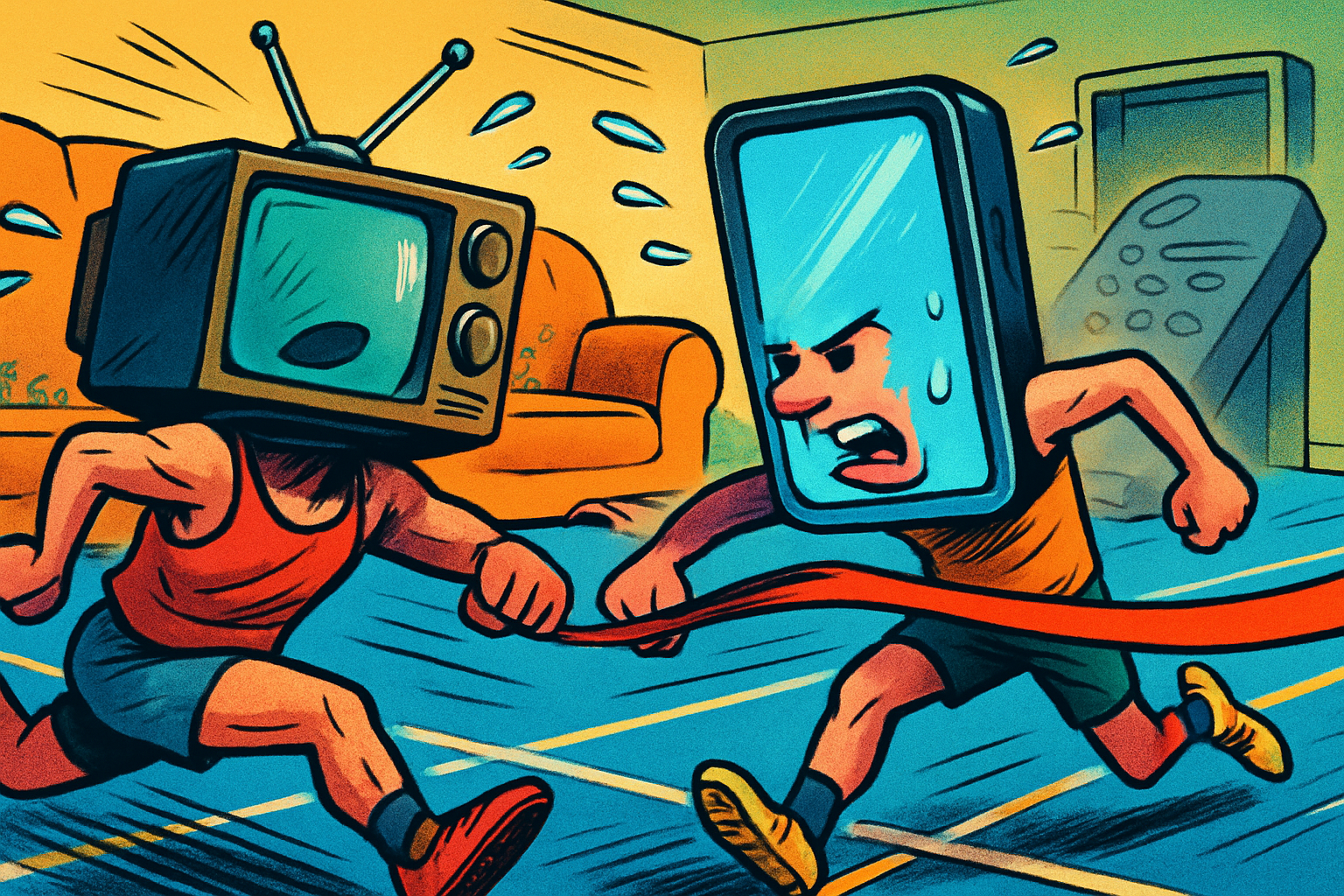
There is a headline going around this week that sounds like the end of an era: Netflix has overtaken the BBC. It is true, and it is also smaller than it sounds, and the gap between those two facts is the whole story.
On 29 July 2026 the UK media regulator Ofcom published its annual Media Nations report, the big yearly stocktake of how Britain watches and listens. Buried in it is a number that every outlet ran with: when people are asked which service they turn to first when they sit down to find something to watch, 26% now say Netflix, and 25% say the BBC. ITV is third, on 15%.
So yes - for the first time on this particular measure, an American streaming service has nudged ahead of the BBC. But look at the size of it. One percentage point. That is not a landslide; it is a photo finish, close enough that the honest way to describe it, and the way Reuters and PA Media both described it, is that Netflix has edged the BBC, or that viewers are now as likely to turn to one as the other. Before anyone declares the BBC finished, it is worth slowing down on what this figure is - and, just as importantly, what it is not.
What the number actually measures
The 26%-versus-25% figure answers one narrow question: which single service do you go to first? It is a survey about instinct and habit - the app you open without thinking - not a measure of how much time people spend, how many people watch, or who has the biggest audience.
That distinction matters because on the broader measures the BBC is not remotely in trouble. The same report says the BBC still accounts for 18% of all the video content Britons watch, more than any other single provider; Netflix, by that yardstick, is on 9%. In other words, the service more people name as their first stop is watched for roughly half as much video as the one it just overtook. Both things are true at once. Netflix is where a sliver more people start their evening; the BBC is where a great deal more watching actually happens.
So if you see this reported as "Netflix now dwarfs the BBC," treat it with caution. On this one survey question, Netflix is a point ahead. On total viewing, it is not close.
The broadcasters are bending, not breaking
The more interesting part of Media Nations 2026 is what it says about traditional broadcast television as a whole - the BBC, ITV, Channel 4 and Channel 5, taken together. The picture is one of slow erosion, not collapse.
Ofcom measures how many people watch content from the traditional broadcasters for at least 15 minutes in an average week. That figure was 70% in 2025 - down, but only gently: it was 73% the year before, and 78% back in 2022. Losing eight points of weekly reach over three years is a real decline, and no broadcaster should be relaxed about the trend line. But it is a drift, not a cliff, and seven in ten Britons still tuning in weekly is a long way from irrelevance.
More striking is where the broadcasters are actually growing. Their own streaming apps - BBC iPlayer, ITVX, Channel 4 Streaming and Channel 5 - were the single fastest-growing category of television service in the report, with viewing up 9% year on year. That is the quiet counter-narrative to the "streaming is killing the broadcasters" story: the broadcasters are themselves becoming streaming services, and on their own apps they are gaining, not losing.
And when something genuinely big happens, the old machinery still does what nothing else can. Ofcom points to England's World Cup semi-final defeat by Argentina on 15 July, which drew a peak audience of 24 million across BBC platforms. No streaming service in Britain gathers 24 million people around the same moment at the same time. That capacity - to make the whole country watch one thing together - is the asset the broadcasters have that the streamers, for all their subscriber numbers, still do not.
The service quietly eating everyone's lunch is YouTube
If there is a genuine disruptor buried in this report, it is arguably not Netflix at all. It is YouTube.
The numbers Ofcom gives for YouTube are about time and habit rather than a first-choice ranking, and they are climbing fast. Average daily viewing of YouTube on the television set - not on a phone, on the actual big screen in the living room - doubled to 19 minutes per person in 2025, up from 9 minutes in 2022. Across all devices combined, daily YouTube viewing reached 41 minutes, up from 33. That is video being watched on the TV, in the space that used to belong entirely to broadcasters, from a service that commissions almost none of it itself.
And it is not only a young-person story. Among people aged 75 and over - the group most loyal to traditional television - YouTube's weekly reach rose to 33% in 2025, from 28% in 2022. When roughly a third of the over-75s are watching YouTube each week, the platform has stopped being a niche for teenagers and become part of the ordinary media diet across the age range.
A quick honesty note here, because it matters for how you read the rest of the coverage. A lot of write-ups of this report have leaned hard on a generational split - specific figures for how much more 16-to-24-year-olds pick Netflix over the BBC, and how strongly the over-75s still pick the BBC. Those age-by-age first-choice percentages are plausible and consistent with everything else in the report, but I could not confirm the exact numbers from a primary document I actually opened, so I am not going to quote them as facts. The one age-specific figure both major wires carry is the 75-plus YouTube number above, so that is the only one I am standing behind.
Radio and audio: less drama, same direction
Media Nations is not only about television, and the audio half of the report tells a calmer version of the same story: traditional formats still dominate, but the ground is shifting underneath them.
According to the report, 93% of UK adults still listen to some form of audio, and 87% listen to live radio in an average week - numbers that would look enviable to almost any part of the media business. Podcasts, the newer arrival, reach more than a quarter of adults weekly. Radio, in other words, is doing what broadcast television is doing: holding a very large base while newer, on-demand habits grow around the edges.
What Ofcom and the BBC each say it means
Ofcom's own framing avoids drama. Kate Davies, the regulator's group director for strategy and research, put it this way: "As audiences increasingly benefit from an incredible choice of content, competition between traditional broadcasters, streaming services, video sharing platforms and other forms of digital media is fierce. But in face of these challenges, traditional broadcasters are showing resilience with the power to bring millions of us together to watch or listen for big, national moments, as well as growing their digital offerings. To thrive and survive in the current media landscape, it's more important than ever for companies to continue to understand changing audience habits and adapt their strategies to meet people where they are."
That is a regulator choosing "resilience" over "decline" as its headline word - and, on the evidence in its own report, that is a defensible choice.
The BBC, unsurprisingly, pushed the same point harder. In response to the report it noted that "eight of the 10 most-watched programmes of 2026 so far have been on the BBC, demonstrating we remain where people turn to for moments that bring the nation together." It is a fair rejoinder: being first-choice for a shade fewer people is a very different thing from making the programmes the most people actually end up watching, and on the second measure the BBC is still comfortably ahead.
The honest bottom line
Strip out the headline drama and here is what the report supports. On one survey question - which service do you reach for first - Netflix has crept a single point ahead of the BBC, 26% to 25%, the first time it has done so. On almost every other measure, the traditional broadcasters, and the BBC in particular, remain the biggest force in British viewing: more total watching, far bigger reach for the moments that matter, and their own streaming apps growing faster than anything else on the list. Underneath both, YouTube keeps taking minutes on the television itself, across every age group.
A couple of things I deliberately left out, because I could not stand them up from a source I actually read: the precise age-by-age breakdown of who picks what, and any exact figure for how much these first-choice numbers moved versus last year. Both are floating around in the coverage; both should be treated as reported-but-unconfirmed until you can see them in Ofcom's own document, which - fair warning - is exactly the kind of primary source worth checking before repeating a striking statistic. The one-point headline is solid. Some of the detail hanging off it is not, at least not from where I am sitting.
The tidy version, then: this is a milestone, not a funeral. The BBC has been overtaken on a single narrow measure by a single point, and remains, by most others, the thing Britain still watches most.
Sources
- Ofcom, Media Nations 2026 report (published 29 July 2026), the primary document behind every figure here: https://www.ofcom.org.uk/media-use-and-attitudes/media-habits-adults/media-nations-reports
- Reuters wire report, "Netflix edges BBC as first choice for UK viewers, Ofcom report shows" (29 July 2026), read via https://www.933thedrive.com/2026/07/28/netflix-edges-bbc-as-first-choice-for-uk-viewers-ofcom-report-shows/
- Reuters wire report, same story, read via https://kelofm.com/2026/07/28/netflix-edges-bbc-as-first-choice-for-uk-viewers-ofcom-report-shows/
- Reuters wire report, same story, read via https://wifc.com/2026/07/28/netflix-edges-bbc-as-first-choice-for-uk-viewers-ofcom-report-shows/
- Reuters wire report, same story, read via https://1065thebuzz.com/2026/07/28/netflix-edges-bbc-as-first-choice-for-uk-viewers-ofcom-report-shows/
- PA Media wire report, "Viewers now as likely to turn to Netflix as the BBC when deciding what to watch" (29 July 2026), read via https://uk.finance.yahoo.com/news/viewers-now-likely-turn-netflix-230100510.html
- PA Media wire report, same story, read via https://www.aol.co.uk/articles/viewers-now-likely-turn-netflix-230100000.html
- PA Media wire report, same story, read via https://www.perspectivemedia.com/viewers-now-as-likely-to-turn-to-netflix-as-the-bbc-when-deciding-what-to-watch/