Naga Munchetty Is Leaving BBC Breakfast After 17 Years - But Not the BBC: What Changed, and What Hasn't Been Said Yet
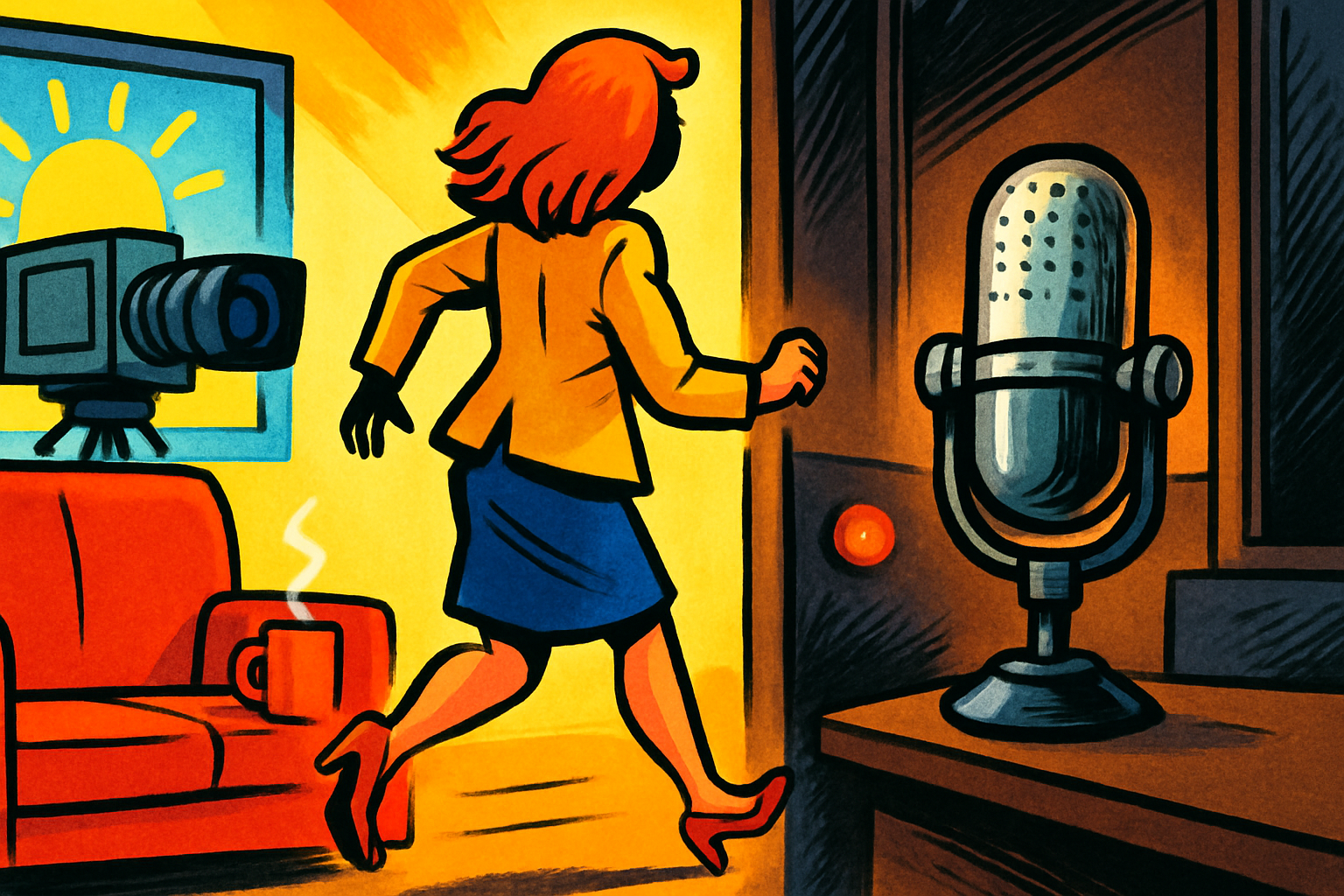
If you watch British breakfast television, one of the most familiar faces on it is about to move. On Tuesday 28 July 2026 the BBC announced that Naga Munchetty is leaving BBC Breakfast after 17 years on the programme, stepping away from the famous red sofa to take charge of a flagship radio show instead. She hosts her last editions of the TV programme in December, and starts the new job in January 2027.
It is a big change, and it has been reported in a lot of different ways - some outlets calling it a departure, some a promotion, one or two making it sound like a clean break. So here is the calm version: what the BBC actually said, what the new role is, what stays the same, and which details are still genuinely up in the air. Because the single most important thing to get right about this story is also the thing the loudest headlines tend to blur.
The one detail the headlines keep blurring
Naga Munchetty is leaving BBC Breakfast. She is not walking away from the BBC. Those are two different sentences, and the difference is the whole story.
Munchetty is not stepping back from broadcasting, and she has not been pushed out. She is moving from one part of the corporation to another - from network television to network radio - to become a presenter of 5 Live Breakfast, the morning news-and-sport programme on BBC Radio 5 Live. Everyone quoted in the announcement framed it as her own choice and as a step up rather than a step away. So if you saw a headline that made it sound like the end of a career, treat it with the pinch of salt it deserves. This is a switch of studio, not an exit from broadcasting.
That matters for how you read every other line in the coverage. A presenter changing shows inside the same organisation is a normal, even routine, thing. What makes this one notable is simply who she is, how long she has been doing the TV job, and how visible the programme she is leaving happens to be.
Seventeen years on the sofa
Munchetty first joined BBC Breakfast in 2009, and is reported to have become one of the programme's main presenters in 2012. Seventeen years is a long run in a format where the alarm goes off in the small hours and the show is live to millions before most of the country has finished its first cup of tea. Over that time she has become one of the anchors British audiences most associate with the start of the day, most often paired on screen with Charlie Stayt.
It is worth being precise about the arithmetic, because the "17 years" figure is doing a lot of work in the headlines. She joined in 2009; the announcement lands in 2026; that is the 17 years everyone is counting. The point where she went from occasional presenter to one of the show's regular main faces came a little later, around 2012, and I am flagging that as reported rather than nailed-down, because outlets stated it without much supporting detail and it is not the sort of thing the BBC's own release dwelt on.
What is not in doubt is the scale of the audience she is leaving behind. BBC Breakfast is one of the most-watched programmes of its kind in the UK, and a presenter who has sat on that sofa for the better part of two decades leaves a genuinely large, habitual audience - the kind of viewers who have a favourite chair, a favourite mug, and a favourite person to hear the morning's news from.
The radio job is not brand new to her
Here is a piece of context that a lot of the coverage skips, and it changes the shape of the story. Munchetty is not stepping into radio for the first time. She has also presented a mid-morning programme on BBC Radio 5 Live for several years - she took over the slot vacated by Emma Barnett - while keeping her place on the Breakfast sofa. So she already knows the station, the studio and the live-radio rhythm well.
(One small honesty note: I have seen the start year of that existing radio show reported as both 2020 and 2021, so I am not going to pin it to a single year. What is consistent across sources is that she has been a 5 Live presenter for a good while, not a newcomer to it.)
What changes in January is the size and centrality of the radio commitment. Instead of a mid-morning slot alongside a TV job, she moves to 5 Live Breakfast - the station's flagship morning programme - and the reporting says she will present it five days a week. That is a full-time weekday morning role, which is roughly why the TV job has to go: you cannot anchor two different flagship breakfast programmes on two different networks at the same time.
What the BBC actually said
Three people are quoted in the announcement, and it is worth reading their words rather than the paraphrases, because the paraphrases are where small distortions creep in.
Munchetty herself, on the new job:
"I'm thrilled to be joining 5 Live Breakfast in January. Live news, great conversations, and connecting with audiences are what I love most about broadcasting, and 5 Live does all of that brilliantly. Presenting a flagship programme on 5 Live is an opportunity that was simply too good to pass up. It will take a huge amount of work and require 100% of my focus and energy, and I'm really looking forward to throwing myself into the role."
On leaving the TV programme, her statement opened by calling it "a privilege to be part of the BBC Breakfast TV team for the past 17 years" and went on to thank her colleagues. I am quoting only the opening line here, because that is the part I could confirm word-for-word; I would rather give you the verified sentence than reconstruct the rest from memory.
The 5 Live side welcomed her in warm terms. Heidi Dawson, Controller of BBC Radio 5 Live, said:
"Naga is one of the UK's most accomplished broadcasters and a hugely valued member of the 5 Live family. Since joining the station, she has led thoughtful and impactful conversations on everything from breaking news to women's health, sport and social issues, building a strong connection with our listeners."
And from the television side, John McAndrew, director of live and daily news at the BBC, marked the goodbye:
"After more than a decade on screen for BBC Breakfast, Naga will be hugely missed by the millions of viewers who've welcomed her into their homes each week."
Read those together and the picture is consistent: radio gaining a well-known name, television losing a long-serving one, and everyone being complimentary about it. There is no hint in any of the official language of a fallout, a demotion or a forced move. If a later report claims otherwise, it will need its own evidence.
Why trade television for radio at all?
To some readers, moving from a prime television slot to radio might sound like a downshift. It usually isn't, and Munchetty's own words point at why.
A flagship national radio breakfast show is a serious platform. It runs long, it runs live, and it lets a presenter drive the agenda in a way a tightly formatted TV sofa often cannot - more time per interview, more room to follow a story, more of the "great conversations" she talked about. Her line about the role requiring "100% of my focus and energy" is the tell: this is being treated as a headline job in its own right, not a quiet wind-down into radio.
There is also a simple practical logic. If the station wants its best-known presenter fronting its most important programme five mornings a week, that presenter cannot also be getting up before dawn for a different network's breakfast show. Something has to give, and in this case it is the television seat.
What has not been settled
A responsible version of this story has to be honest about the blanks, and there are a few.
First, her replacement on BBC Breakfast has not been announced. Anyone confidently telling you who is taking the seat is guessing until the BBC says so.
Second, her co-host on 5 Live Breakfast has not been appointed either. The reporting is clear that a co-presenter is still to be named, so treat any specific pairing you see floated as speculation. (I have deliberately left out one early claim about which current presenters she is "replacing", because the wire copy of the announcement names no one she displaces and the accounts conflict.)
Third, the exact date of her final BBC Breakfast broadcast has not been set out - only that it happens in December. And no one has disclosed anything about money, so any figure you see attached to the move is not coming from the announcement.
None of those gaps changes the core, which is solid: a 17-year BBC Breakfast presenter is leaving the show at the end of the year to front 5 Live Breakfast from January, and she is staying with the BBC to do it. The rest - the successor, the co-host, the exact final show - is the kind of detail that tends to arrive in its own good time, and that is worth waiting for rather than filling in early.
If you have watched her wake the country up for the last decade and a half, the short version is this: you will still be able to hear her most mornings next year. You will just have to turn the radio on instead.
Sources
- https://www.bbc.co.uk/news/articles/cn0ngrpp2p5o
- https://www.brentwoodlive.co.uk/news/national/uk-today/26414771.naga-munchetty-leave-bbc-breakfast-landing-new-job/
- https://www.royston-crow.co.uk/news/national/uk-today/26414771.naga-munchetty-leave-bbc-breakfast-landing-new-job/
- https://www.aol.co.uk/articles/naga-munchetty-quits-bbc-breakfast-081700000.html
- https://www.gbnews.com/celebrity/naga-munchetty-quits-bbc-breakfast
- https://radiotoday.co.uk/2026/07/naga-munchetty-to-host-bbc-5-live-breakfast/
- https://en.wikipedia.org/wiki/Naga_Munchetty
- https://www.barkinganddagenhampost.co.uk/news/national/uk-today/26414771.naga-munchetty-leave-bbc-breakfast-landing-new-job/