"Very, Very, Very, Very, Very Good": How Uganda's Ghetto Kids Ended Up Dancing With Shakira at the World Cup Final
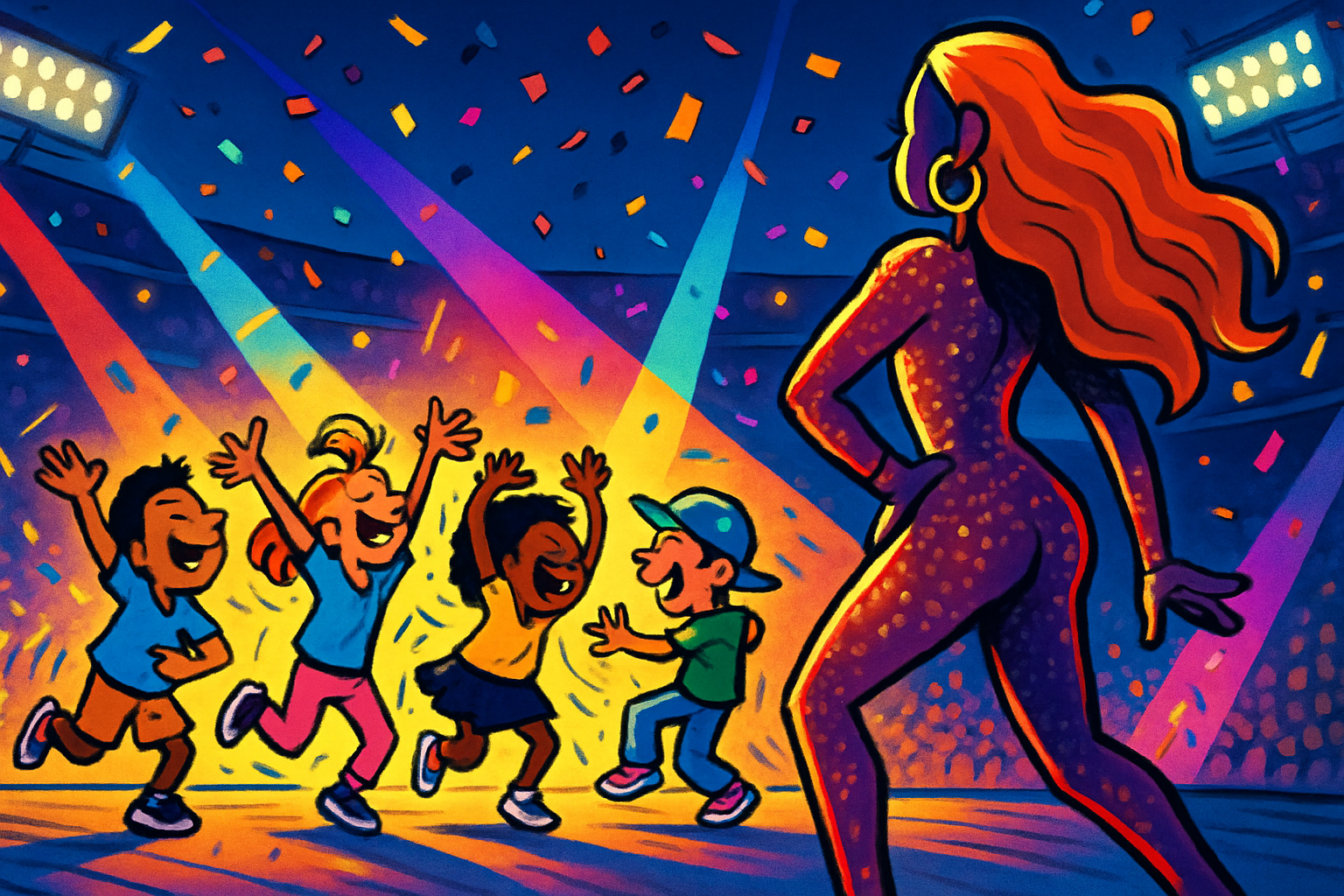
Some sentences do not need editing. Asked what it was like to dance with Shakira in front of a packed stadium and a global television audience, the children of Uganda's Ghetto Kids reached for the plainest possible verdict and simply refused to stop: it was, they said, "very, very, very, very, very good." Five "very"s. A BBC headline ran the whole string, verys and all, because trimming it would have missed the point. That is what unfiltered joy sounds like when a group of kids from a Kampala slum gets pulled onto one of the biggest stages on the planet.
Here is the calm, checked version of how that moment came to be — who the Ghetto Kids are, what actually happened at the World Cup final, and, at the end, the handful of things floating around this story that we could not stand behind.
What happened
On 19 July 2026, the FIFA World Cup final was played at MetLife Stadium — temporarily renamed for the tournament — in East Rutherford, New Jersey. For the first time, the final was staged with a halftime show, built in the style of the NFL's Super Bowl rather than the brief on-pitch ceremonies World Cups have run before. It was a big, headline-stacked production, and among the performers was the Colombian pop star Shakira, alongside the Nigerian Afrobeats artist Burna Boy.
Sharing that stage were the Ghetto Kids. They danced to "Dai Dai," the tournament's official song, which Shakira and Burna Boy created together. And when it was over, the reaction from the children was not a rehearsed sound bite about honour and opportunity — though their founder supplied that too — but that giddy, five-times-over "very, very, very, very, very good." The BBC piece that carried the line framed the whole thing the way anyone watching would have: as a dream come true for the kids.
It is worth being precise about who said what. That headline quote belongs to the group, to the children collectively, rather than to any one named child; the reporting attributes it to the Ghetto Kids, and we are leaving it exactly there rather than inventing a single grinning face to hang it on.
Who the Ghetto Kids actually are
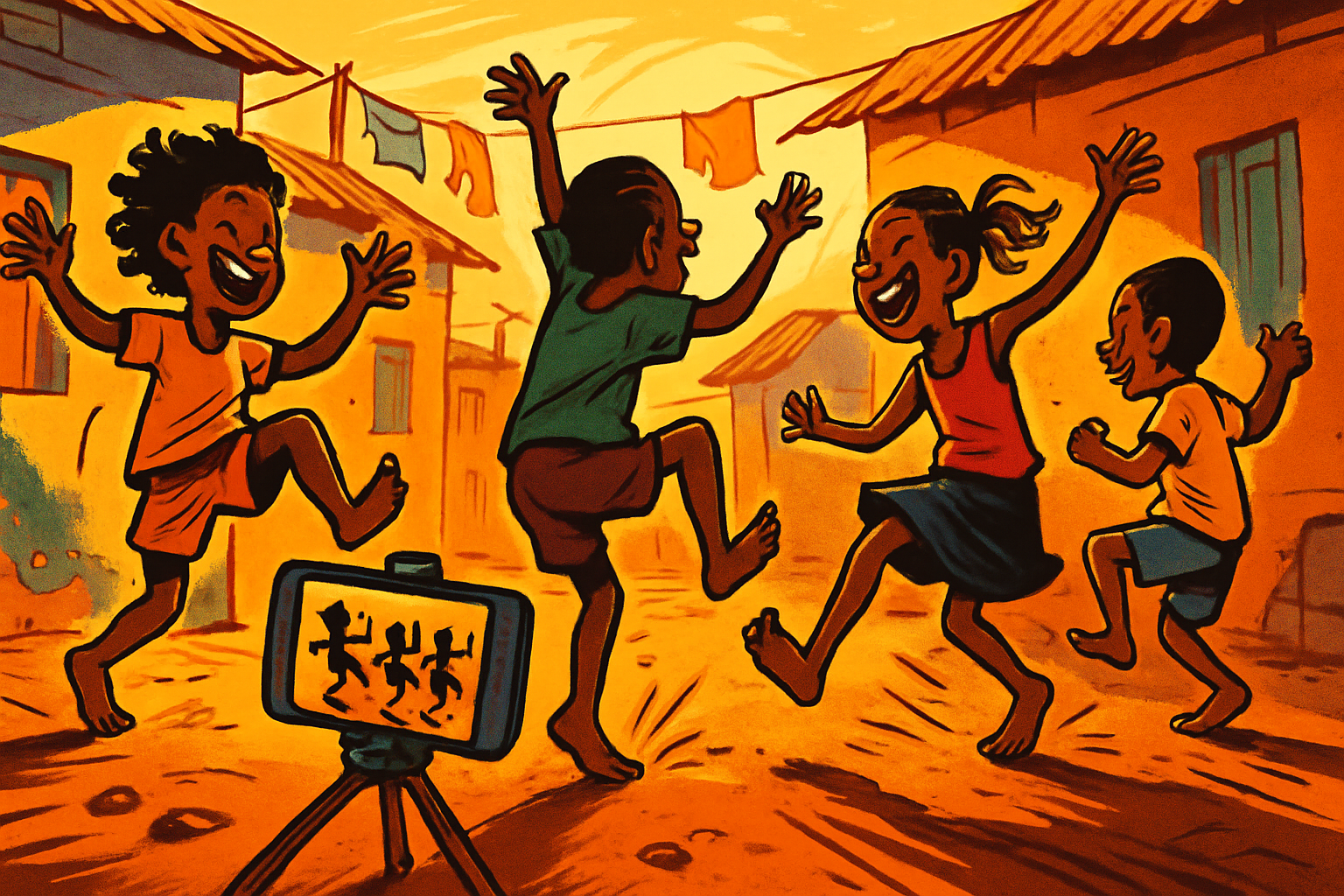
If the name is new to you, the backstory is the part that makes the World Cup moment land. The Ghetto Kids — formerly billed as the Triplets Ghetto Kids — are a Ugandan dance group founded in 2014 by a dance teacher named Dauda Kavuma. They are based in Katwe, one of the poorest districts of Kampala, and they are children: reporting on the group puts the members roughly between the ages of six and thirteen.
Their first brush with a global audience came the way a lot of things did in the 2010s — a video that would not stop travelling. They danced to Ugandan musician Eddy Kenzo's track "Sitya Loss," and the clip went around the world, all sharp timing and irrepressible energy from kids who plainly loved doing it. That viral moment turned a local troupe into an international name.
The credential most people outside Uganda will recognise, though, is a talent show. In April 2023 the Ghetto Kids appeared on Britain's Got Talent, where judge Bruno Tonioli hit the Golden Buzzer for them mid-performance — not even waiting for the routine to finish. They went through to the final and finished in sixth place. Not a win, and we should say so plainly, because the story gets rounded up to one sometimes; but a Golden Buzzer and a place in the final of a show watched by millions is its own kind of arrival.
So by the time the World Cup call came, this was not a random group of children plucked from nowhere. It was a troupe with a decade behind it, a viral origin story, and a Golden Buzzer on the shelf. The final was a new altitude, not a first flight.
The Shakira connection
The bridge from a Kampala dance yard to a World Cup stage was, by every account read for this piece, Shakira herself. She announced the children's involvement ahead of time — reporting points to a video she posted on 20 May 2026 — and she framed it not as a charity add-on but as something that had genuinely moved her.
In her own words, quoted in coverage of the performance: "The Ghetto Kids from Uganda have changed our lives. Spending time with them has been magical and has taught us so much! I'm so happy to finally have them here in New York to dance with me at the World Cup Final!!" It reads less like a star doing a good deed for the cameras and more like someone who had spent real time with these kids and wanted them beside her at the biggest gig of the year.
From the group's side, the founder Kavuma Dauda put the weight of it in one line: "This one is very different. It's a huge opportunity for the Ghetto Kids, for me, and for the children who have no hope." That last clause is the whole project in miniature. The Ghetto Kids have always been about more than a dance routine; the group exists to give children from Katwe a way up and out, and a World Cup final is about as visible a rung on that ladder as exists.
There is a warmer, more personal layer that has circulated too — accounts of Shakira taking the children around New York, including Times Square, and having them spend time with her own kids. We are flagging that as reported rather than stating it as confirmed, because it traced back to a single account in our checking. It fits everything else about the story; it is just not something we can independently stand behind, so we are labelling it honestly instead of dressing it up.
Why a moment like this travels
It is easy to be cynical about a corporate halftime spectacle, and a World Cup final's first-ever halftime show — a headliner-stacked affair — is exactly the sort of thing cynicism was invented for. But the Ghetto Kids cut straight through that. A polished superstar segment is impressive; a group of children from a Kampala slum losing their minds with happiness on that same stage is something else. One is production. The other is a story.
Part of why it resonates is that the arc is real and slow. This was not an overnight discovery engineered for a broadcast. It was 2014 to 2026 — a founder, a viral clip, a talent-show final, years of work — arriving at a place that would have seemed absurd to imagine at the start. When the kids said it was "very, very, very, very, very good," they were not performing gratitude. They were describing, in the only words that felt big enough, the far end of a very long climb.
And it matters that the words were theirs and stayed theirs. The most quotable thing to come out of one of the year's most produced events was a spontaneous, ungrammatical, repeated "very" from a child. No press office writes that. It is the sound of the real thing, and it is why the line outran the rest of the coverage.
What we could not confirm
Keeping to how we handle a fast-moving feel-good story, here is what this article deliberately does not claim.
- A single named child as the source of the quote. The "very, very, very, very, very good" line is attributed to the group. We have not assigned it to an individual, because the reporting doesn't.
- How many children performed. No source we read gave an exact headcount for the final, so we have not printed one.
- The match itself. This piece is about the halftime performance. We did not separately verify who won the 2026 final or the score, and so we have said nothing about either.
- The Britain's Got Talent result as a win. They earned a Golden Buzzer and finished sixth in the 2023 final. We have not upgraded that to a victory.
- The New York extras. The Times Square outing and the time spent with Shakira's own children come from a single account; we have marked them as reported, not confirmed.
- The halftime show's precise production details. The final's first-ever halftime show came with various headline figures attached in secondary coverage; we have described it in general terms rather than repeating specific numbers we could only trace to one place.
One process note, in the spirit of showing our work: the lead that surfaced this story was a BBC brief our tools could not open directly. Rather than paraphrase a page we had not read, we read the same report where The New Times republished it in full, cross-checked the group's history and the final's details against Wikipedia and TRT Afrika, and took Shakira's and the founder's quotes from entertainment coverage that carried them. Every link below was checked as reachable.
The takeaway
Strip it down and the story is small and complete. A dance group founded in a Kampala slum in 2014, famous first for a viral video and later for a Golden Buzzer, ended up on stage at the 2026 World Cup final in New Jersey, dancing to Shakira and Burna Boy's tournament song at the first halftime show a final has ever had. Asked how it felt, the children said it was "very, very, very, very, very good," and there is genuinely nothing to add to that. Sometimes the biggest stage in the world is best summed up by a kid who just wants you to know, five times over, that it was good.
Sources
- Dancing with Shakira at World Cup was 'very, very, very, very, very good' — Ghetto Kids — BBC
- Dancing with Shakira at World Cup was 'very, very, very, very, very good' — Ghetto Kids (republished) — The New Times
- Ghetto Kids — Wikipedia
- 2026 FIFA World Cup final — Wikipedia
- Uganda's Ghetto Kids to perform with Shakira at 2026 World Cup final — TRT Afrika
- Shakira Went Above and Beyond Her Promise to Uganda's Ghetto Kids at FIFA World Cup — Yahoo Entertainment
- 2026 FIFA World Cup — Wikipedia
- Shakira — Wikipedia
- Burna Boy — Wikipedia
- Sitya Loss — Wikipedia