Carly Simon Says She Is Living With Parkinson's: What She Shared, What She Didn't, and How to Read the News
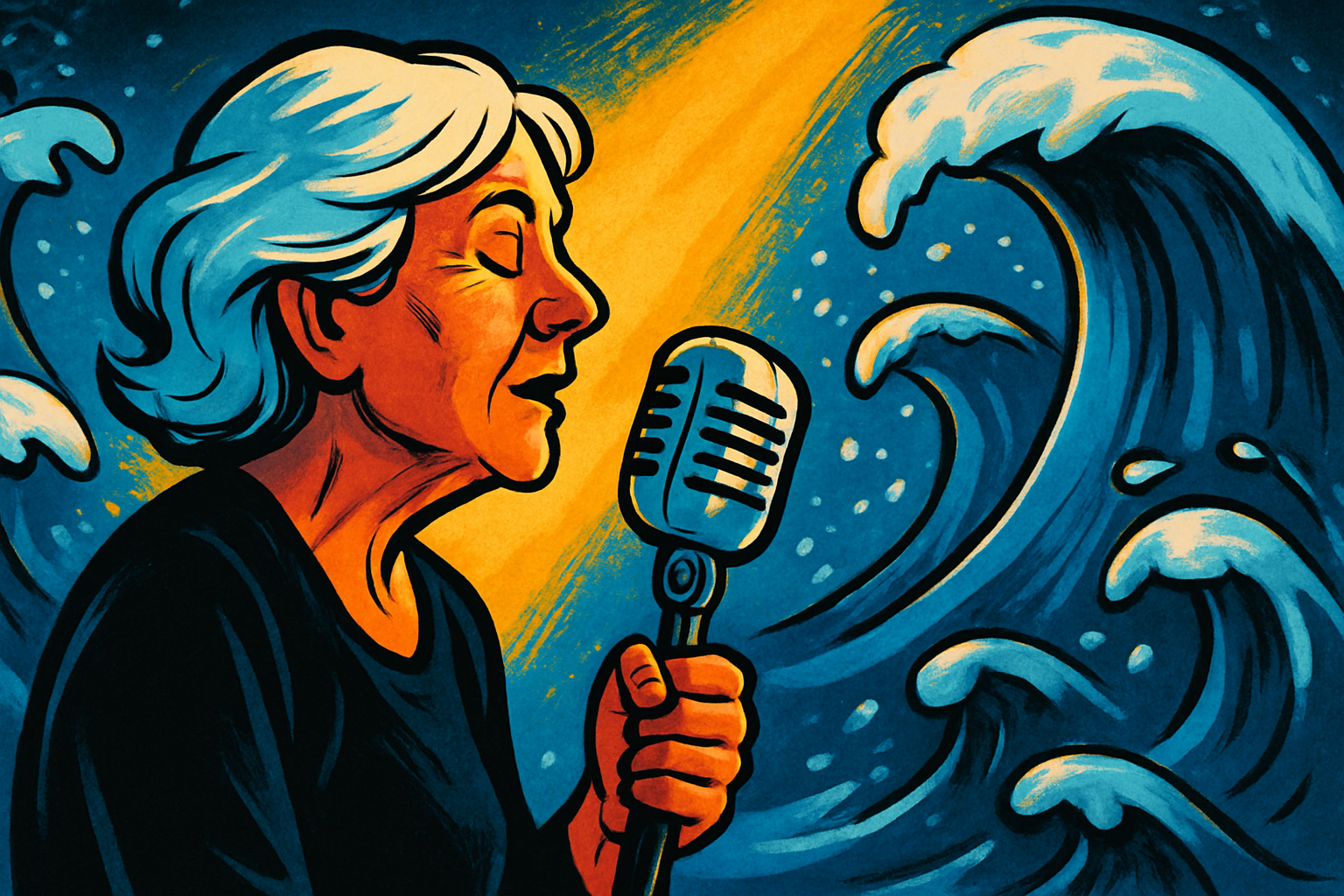
On Monday 27 July 2026, Carly Simon told her fans something she had kept quiet for a while: she has Parkinson's disease. The 81-year-old singer-songwriter behind "You're So Vain" put it in a written statement rather than an interview, and the line that every outlet ran with was hers, not a headline writer's: "I have not stopped living, and I have not stopped working."
If you only saw the headline flash past, here is the calm version — what she actually said, what the reporting does and does not establish, and a short, plain guide to what a Parkinson's diagnosis means, so the story reads as information rather than alarm.
What Carly Simon actually said
Simon framed the news as an answer to people who had been wondering about her relative quiet. "The truth is, I've been learning how to live with Parkinson's disease," she wrote — a sentence Rolling Stone and ABC News both carried word for word. The emphasis throughout was continuity, not retreat. She is still here, still working, and, as the next section covers, still releasing music.
Two things are worth flagging before we go further, because they are the sort of detail that gets bent in the retelling. First, this was a statement she chose to release, in her own words; it was not prised out of a hospital record or a leak. Second, the outlets that carried it — Rolling Stone, Variety, The Hollywood Reporter and ABC News among them — describe the same statement, so the core facts are corroborated across independent reporting rather than resting on a single source.
Beyond the two lines quoted above, the wording of her longer, more reflective passages varied a little between outlets. Where that happened, this piece paraphrases rather than putting words in her mouth. A diagnosis a person has just disclosed is exactly the wrong place to sand a quote into a cleaner shape than she wrote it.
The health details she shared
The path to the diagnosis, as Simon described it and as The Hollywood Reporter and ABC News reported, started somewhere ordinary: arthritis. She had it in both knees and in one hip, and it led to three joint-replacement surgeries. Even after those, her mobility kept slipping. She reached a point where she could not walk without considerable help.
That decline was what prompted a fuller look. After an extensive evaluation at the Mayo Clinic, she was diagnosed with Parkinson's, and she began treatment, including medication to ease stiffness and other symptoms. In the same period she was also treated for basal cell carcinoma — a common form of skin cancer — on her face, and it was removed.
Notice what is present and what is absent here. Present: a clear sequence of arthritis, surgeries, worsening mobility, evaluation, diagnosis, treatment. Absent: a date for when she was actually diagnosed, and any stated cause. She did not give a timeline for the diagnosis itself, and no source invented one. That gap is not a hole in the reporting; it is simply information she did not share, and it is worth resisting the urge to fill it in.
What Parkinson's disease is, in plain terms
Because this is the part where rumour usually rushes in, here is the ground truth from the Parkinson's Foundation, an established patient-facing authority.
Parkinson's is a neurodegenerative disorder that mainly affects the dopamine-producing neurons in a small area of the brain called the substantia nigra. Its symptoms generally develop slowly, over years. The four main movement-related symptoms are tremor — often a resting tremor, sometimes described as "pill rolling" in the hands — slowness of movement (the clinical term is bradykinesia), stiffness in the limbs (rigidity), and problems with balance and walking.
Two facts matter most for reading news like this. The first is that Parkinson's is not the same disease in any two people; the Foundation is explicit that progression differs from one person to another because of the diversity of the condition. That is why a diagnosis tells you far less about someone's day-to-day life than you might assume, and why comparing one person's course to another's is usually unhelpful.
The second is that there is no cure, but the condition is managed — with medication, lifestyle adjustments and, in some cases, surgery — and the Foundation states plainly that it is possible to have a good to great quality of life with the disease. It is a serious, lifelong diagnosis. It is not, on its own, a terminal one, and nothing Simon said suggested otherwise.
The career this news sits against
For readers who know exactly one Carly Simon song, it is almost always "You're So Vain," the 1972 single whose subject people are still arguing about half a century on. But the reason her health update travelled the way it did is a fuller catalogue and a rare kind of industry recognition behind it.
Simon has an Academy Award — she won Best Original Song for "Let the River Run," written for the 1988 film "Working Girl," a song that also carried a Grammy and a Golden Globe. She is a Grammy-winning artist across a career spanning more than five decades. And in 2022 she was inducted into the Rock and Roll Hall of Fame, at the 37th induction ceremony that November, an honour she received long after first becoming eligible.
That last event carried its own weight of grief: around the time of the induction she lost both of her sisters to cancer, a day apart. It is context, not part of this week's medical news, but it is part of why the current statement's insistence on carrying on reads the way it does. This is someone who has kept working through a great deal.
A new album, not a goodbye
The single most important corrective to any "end of an era" framing is on the release calendar. Simon has a new album, "Comes in Waves," due out on 14 August 2026 — a 12-track record announced back in June, when she shared its lead single, "Howl."
It is not a repackage or a live set. Coverage of the album, and its entry on Wikipedia, describe it as her first collection of newly written material since 2008's "This Kind of Love" — roughly an eighteen-year gap. So the timeline reads: an artist writes her first album of new songs in nearly two decades, announces it in June, and then, weeks before it lands, tells her audience she has been living with Parkinson's the whole time. Read in that order, "I have not stopped working" is not a brave slogan bolted onto bad news. It is a plain description of what the release schedule already showed.
What we could not confirm
In keeping with how we cover a health story, here is what this article deliberately does not claim.
- When she was diagnosed. She disclosed it on 27 July 2026. The diagnosis itself has no public date, and we have not assigned one.
- A cause. None was stated, and the cause of Parkinson's is not established medically. We have not linked it to her surgeries, her age, or anything else.
- Her exact longer quotes. We quoted only the two lines that appeared identically across independent outlets and paraphrased the rest, because the wording of her more reflective passages differed between reports.
- Her precise Grammy count and other award tallies. We have named the awards we could tie to a source — the Oscar for "Let the River Run," the 2022 Rock and Roll Hall of Fame induction — and described her as a Grammy winner without a running total.
- The lead single's exact release date. Reports placed "Howl" in June 2026; we have not pinned a specific day.
One process note, in the spirit of showing our work: the news first reached our desk through a BBC entertainment brief that our tools could not open directly. Rather than paraphrase a page we had not read, we confirmed the diagnosis and its details through the full statements carried by Rolling Stone, Variety, The Hollywood Reporter and ABC News, and every link below was checked as reachable. Where those outlets agreed, we reported it; where they diverged, we said so.
The takeaway
Strip the story to its verified core and it is short. Carly Simon, 81, has Parkinson's disease, diagnosed at the Mayo Clinic after arthritis and joint surgeries left her mobility failing; she was also treated for a skin cancer on her face; she is in treatment, she is not walking away from her work, and she has an album out in a few weeks. Everything past that — a cause, a date, a prognosis, a tidy narrative arc — is either unknown or hers to tell, and she has told the part she wanted to. "I have not stopped living, and I have not stopped working" is, for now, both the quote and the whole story.
Sources
- Carly Simon Reveals Parkinson's Disease Diagnosis — Rolling Stone
- Carly Simon Reveals Parkinson's Disease Diagnosis — Variety
- Carly Simon Reveals Parkinson's Diagnosis — The Hollywood Reporter
- Carly Simon reveals she's been diagnosed with Parkinson's disease — ABC News
- Carly Simon reveals Parkinson's diagnosis — BBC
- Carly Simon Announces New Album Comes In Waves, Shares Lead Single "Howl" — mxdwn
- Comes in Waves — Wikipedia
- Carly Simon Enters the Rock and Roll Hall of Fame — Variety (2022)
- Carly Simon — Rock & Roll Hall of Fame inductee page
- What Is Parkinson's? — Parkinson's Foundation