Britain's First TikTok Prime Minister: How Andy Burnham Reached Number 10, and Why People Keep Comparing Him to New York's Zohran Mamdani
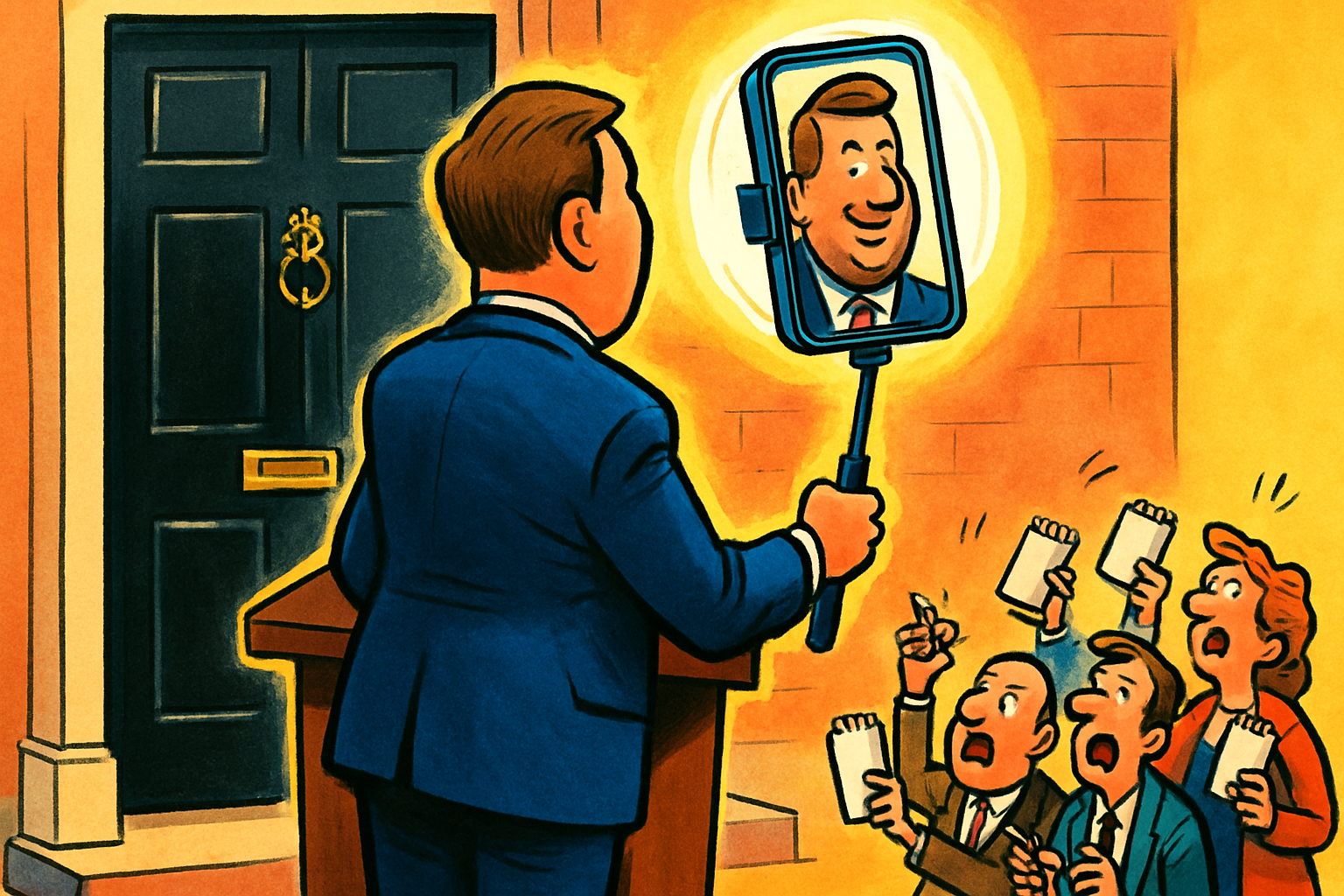
Britain has a new prime minister, and the first thing a lot of people learned about him was not a policy or a speech. It was a video. Since Andy Burnham walked into Number 10 on 20 July 2026, the story travelling fastest has been the way he governs out loud on social media, in a register that looks far more like a New York mayoral campaign than a British party-political broadcast. The Guardian went as far as to call him the UK's first TikTok prime minister.
That framing is fun, and there is something real underneath it. But it also skips over a genuinely unusual route to power, and it leans on a set of viral numbers that are worth handling with care. So here is the calm version: how Burnham actually became prime minister, what the social-media operation is and is not, who Zohran Mamdani is and why the comparison keeps getting made, and which parts of this you should take as established fact versus one newspaper's reporting.
How he got to Number 10 without a general election
This is the part the memes tend to skip, and it matters, because Burnham did not arrive through the front door of a nationwide vote.
Start with where he was. For nine years he was the Mayor of Greater Manchester, elected on 8 May 2017 and re-elected in 2021 and 2024. He was not a member of Parliament. Under Labour's rules you cannot lead the parliamentary party, and therefore cannot become prime minister, without a seat in the House of Commons. So a seat had to be found.
It was. Josh Simons, the Labour MP for Makerfield who had been elected in 2024, resigned the seat specifically to let Burnham stand for it. The resulting Makerfield by-election was held on 18 June 2026, and Burnham won it comfortably: 54.8 per cent of the vote and 24,927 ballots, well clear of Reform UK's Robert Kenyon on 34.5 per cent (15,696) and Restore Britain's Rebecca Shepherd on 6.8 per cent (3,111). He stepped down as Greater Manchester mayor the next day, 19 June, and became an MP.
The reason a seat was needed at all was a leadership crisis at the top of the governing party. Keir Starmer, prime minister since 5 July 2024, had presided over a long slide in Labour's fortunes: record losses in the 2025 and 2026 local elections, a net approval rating that Wikipedia records falling to around minus 46 per cent by November 2025 — the worst for any prime minister on record since 1977 — and, back in 2024, more than 20,000 members leaving the party inside two months. On 22 June 2026, days after Burnham won his by-election, Starmer announced he was resigning as Labour leader, citing his MPs' lack of confidence in him.
What followed was less a contest than a coronation. When nominations closed on 15 July, Burnham was the only eligible candidate, with 379 nominations — over 94 per cent of all Labour MPs, a share that beat even Gordon Brown's 88 per cent when he took over uncontested in 2007. No rival cleared the 81 nominations (20 per cent of the parliamentary party) needed to force a vote. Burnham was acclaimed as Labour leader at a special conference on 17 July, and on 20 July, Starmer tendered his resignation to King Charles III, who then invited Burnham to form a government.
So the honest headline is this: Burnham became prime minister by winning his party's leadership and a single by-election, not by winning a general election. No nationwide vote has been held. He holds the usual bundle of titles that come with the job — First Lord of the Treasury, Minister for the Civil Service, Minister for the Union — and one first of his own: he is the first prime minister to belong to the Labour and Co-operative Party.
The TikTok operation, and the numbers behind it
Here is where the "TikTok prime minister" label comes from, and here is where I want to be scrupulous about who is reporting what.
Everything in this section is the Guardian's reporting, which I read through a verbatim syndication rather than on the Guardian's own site, because the site would not load for our checks. I am attributing it rather than confirming it, and you should read it the same way.
According to the Guardian, Burnham's TikTok following jumped about 73 per cent in his first week in office — from just under 99,000 to more than 170,000 followers, a figure it credited to the consultancy Knox Digital. It reported that searches for "Andy Burnham" on TikTok surged more than 2,000 per cent day-on-day in the UK when he became prime minister. Individual clips did big numbers too, the paper said: a "day one" montage past 820,000 views, a video announcing a policy on VAT on energy bills past a million, and a video about bus fares that reportedly hit 240,000 likes and more than two million views, described as his most popular post of the week.
The paper also pointed to a collaboration that tells you the strategy in one image: a jog through London with Sir Mo Farah, filmed for the Olympic champion's own "Run With Mo" YouTube series, with Farah's 1.9 million Instagram followers as part of the reach. And it offered a neat comparison of style over substance-of-numbers: Burnham's first-week TikTok engagement rate of 6.29 per cent versus Starmer's 6.23 per cent in his own first week back in December 2025 — nearly identical, which is a useful reminder that raw engagement is not the same thing as popularity.
I have not independently verified any of those view counts, and I am not going to pretend otherwise. What I can confirm is narrower: the account exists. Burnham's official TikTok, @andy.burnham, is real and describes him as Prime Minister of the UK. I could not open the profile directly to read a live follower count, so I am not quoting one; treat the 170,000 as the Guardian's first-week snapshot, not today's total.
Who is Zohran Mamdani, and why the comparison?
The name that keeps getting attached to Burnham belongs to a New York politician, and the parallel is doing real work in how this story is being told — so it is worth knowing who he actually is.
Zohran Mamdani is the 112th Mayor of New York City, in office since 1 January 2026. He is the city's first Muslim mayor, its first Asian American mayor, and its first foreign-born mayor since Abraham Beame; he took the oath from the state's attorney general, Letitia James. Born in Kampala, Uganda, on 18 October 1991, he served in the New York State Assembly from 2021 to 2025 before running for City Hall. Crucially for this comparison, his campaign's success was widely attributed to the way it used social media to reach younger voters, complete with Bollywood songs and cultural references that a conventional operation would never have tried.
That is the template people see in Burnham: a mainstream centre-left politician borrowing the grammar of a very online, very informal campaign — memes, collaborations, replying in the comments, talking policy while doing something ordinary. The Guardian noted one moment where Burnham tapped the camera and stepped backwards, a move it read as a direct nod to a Mamdani video from April. Whether that was homage or coincidence, the family resemblance is the point: two politicians on different continents reaching for the same younger, harder-to-reach audience through the same platforms.
It is worth saying plainly what the comparison is not. Mamdani runs a city; Burnham runs a country. Mamdani won an election to get his job; Burnham, as covered above, did not go to the national polls to get his. The shared thread is communication style, not circumstance.
Does the style work, or is it a trap?
Not everyone thinks a prime minister leaning this hard into TikTok is a good idea, and the Guardian's own piece carried the tension rather than smoothing it over.
On one side, the reporting quoted Professor Andrew Chadwick of Loughborough University, who studies political communication, saying Burnham "has gone all in on the TikTok style." On the other, it quoted Debbie Saslaw of the social agency Melted Solids with a blunt warning about politicians chasing internet formats: "Stay away from that. That's something that becomes automatically cringe, no matter who does it." Both things can be true at once. A format that makes a new leader feel fresh and reachable in week one is also a format that curdles quickly the moment the novelty fades or a serious crisis makes the jokes look out of place.
There is a deeper question the numbers cannot answer, and it is the one that actually matters. Reach is not consent. A 2,000 per cent spike in searches tells you people are curious about a new prime minister, which is exactly what you would expect of any new prime minister. It does not tell you they approve of him, trust him, or would vote for him. Burnham's first big electoral test as a national leader is still ahead of him, and no amount of first-week engagement settles it in advance.
What we could not stand up
In the spirit of showing the seams: three things in this story are softer than the confident headlines suggest, and you should know which.
First, the mandate. Burnham is prime minister on the strength of a party leadership and one by-election, and reasonable people will argue about what that means for his authority until the country actually votes. That is a live political debate, not a settled fact, and this piece has tried to describe the mechanism rather than pass judgment on it.
Second, the viral metrics. The follower jump, the search surge and the per-video view counts are all the Guardian's reporting, read here through syndication because the original would not open for our checks. I have attributed every one of them and confirmed none independently. If a single number in that section turns out to be off, it is the paper's number, not a fact we verified.
Third, the live scoreboard. Because his TikTok profile would not load for us, I have deliberately not stated a current follower total. The account is genuine; the exact figure today is something I would rather leave blank than guess at.
None of that undercuts the core, which is solid and sourced: as of 20 July 2026, Britain's prime minister is Andy Burnham, he reached the job by an unusual route, and he is running the most social-media-forward communications operation Downing Street has tried — one that has people reaching, fairly or not, for a comparison with a mayor 3,000 miles away.
Sources
- https://www.gov.uk/government/ministers/prime-minister
- https://en.wikipedia.org/wiki/Premiership_of_Andy_Burnham
- https://en.wikipedia.org/wiki/Andy_Burnham
- https://en.wikipedia.org/wiki/2026_Labour_Party_leadership_election
- https://en.wikipedia.org/wiki/2026_Makerfield_by-election
- https://en.wikipedia.org/wiki/Keir_Starmer
- https://en.wikipedia.org/wiki/Zohran_Mamdani
- https://www.aol.co.uk/articles/uk-first-tiktok-pm-andy-050037000.html
- https://www.theguardian.com/politics/2026/jul/25/tiktok-andy-burnham-zohran-mamdani-social-media
- https://www.tiktok.com/@andy.burnham